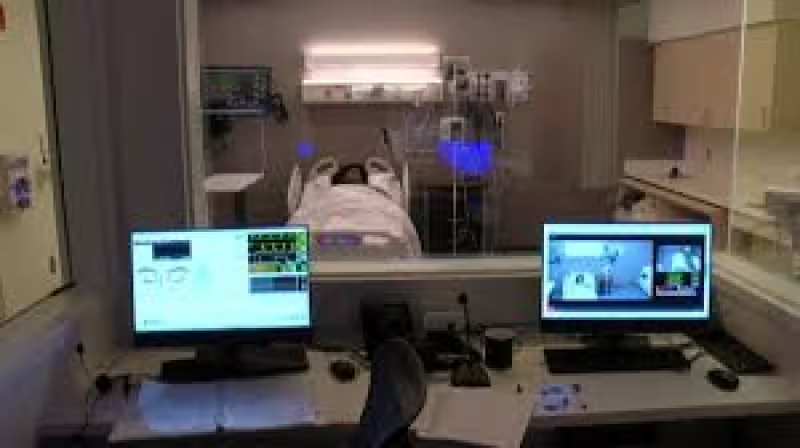
Elmhurst University says nursing simulation has become an essential bridge between classroom learning and clinical practice, giving students a place to build the skills they will need before they ever step into a hospital room. In a blog post available on the university site on May 7, Sara DePaul wrote that the question driving the approach is simple: What helps nursing students feel ready for the first day they care for real patients?
The post says high-fidelity simulation, standardized patient encounters and immersive learning scenarios help students strengthen competence and confidence. It says learners can practice critical thinking, communication and technical skills in a realistic, controlled environment, while also learning to assess patients, administer interventions, collaborate with team members and evaluate outcomes without putting anyone at risk.
The post frames simulation as more than a classroom exercise. It says advanced nursing simulation labs let students repeatedly practice essential skills before caring for live patients, whether they are responding to chest pain, a medication reaction, respiratory distress or a mental health crisis. Students can repeat scenarios until competence improves, and the training is meant to reduce anxiety before clinical rotations by making hospital workflows, equipment and teamwork expectations feel familiar.
That preparation matters because the National Council of State Boards of Nursing considers high-quality simulation an effective supplement to portions of traditional clinical education when evidence-based standards are followed. The post says research shows students who engage in clinical nursing simulation training demonstrate improved confidence, stronger communication skills and better readiness for practice, which is why programs increasingly use it as a bridge between classroom learning and clinical practice.
The tension in the piece is that nursing students are being asked to show readiness for unpredictable, high-stakes patient care before they have full experience in the setting where that care happens. Simulation cannot replace every real encounter, but the post says it gives learners a safer way to practice delegation, structured communication with providers, vital-sign interpretation and pressure-filled decision-making before live patients depend on them.
DePaul’s conclusion is direct: simulation technology prepares future nurses to deliver safe, compassionate real-world care. For programs such as university of northern iowa nursing and others watching the same trend, the question is no longer whether simulation belongs in training, but how well it can be used to prepare students for the moment classroom work turns into bedside responsibility.