On a corner near Vinnin Square in Swampscott, a white farmhouse once housed Gen. John Glover, one of George Washington’s key commanders during the American Revolution. The house is one of two local reminders that the town’s shoreline was already steeped in wartime history before Swampscott was even known by that name.
Glover bought the property in 1781 as a confiscated estate and lived there after years of military service, including leading the Marblehead Regiment during the war. At the time, the land was part of the area historically known as the Salem Finger and fell under what is now Salem’s jurisdiction. Nancy Shultz said many people, even Swampscott residents today, do not realize the town has ties to Revolutionary history, and added that there is certainly Revolutionary War history here, especially when looking at the John Glover house.
A short drive away, an Ingalls family monument stands on a small green along the coast, honoring members of the family who served in the Revolutionary War and later American conflicts. Descendants say multiple members living in what was then known as Ingalls Row left their homes in 1775 to march toward Lexington. John Ingalls said that by the time the family reaches 1775, the men heading for Lexington were all descended from Edmund Ingalls, one of the earliest settlers of Lynn, who arrived in 1629.
The family record is unusually deep. Five men from Swampscott are recorded as responding during the war’s early days, and those names trace back to Edmund Ingalls. Rebecca Ingalls said she is not sure the average resident of Swampscott is really thinking about the past and how the town almost stands on the shoulders of the people who came before. The only remaining home from that cluster of houses still standing today is the Swampscott Yacht Club, once the residence of Joseph Ingalls, who bought the property in the 1700s for a pair of cows before serving in the war.
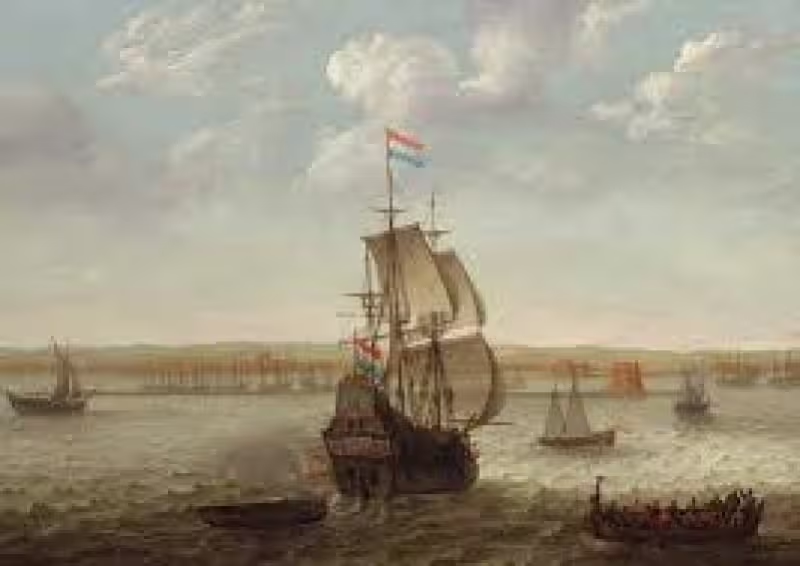
That contrast — a beachfront town that looks modern but still holds direct links to 1775 and 1781 — is what gives the story its weight today. For readers looking for the British side of the conflict as well, a documentary by Lucy Worsley revisiting the American Revolution's British side offers another angle on the same era. In Swampscott, though, the answer is closer to home: the Revolutionary War is not just remembered there, it is built into the ground and the surviving houses.