The war in Iran and President Donald Trump’s rhetoric have pushed U.S. alliances with Europe close to the breaking point, with Washington refusing to bring many European partners into its plans for the conflict or the talks meant to end it. Officials on the continent say the White House has offered what amounts to a diplomatic version of the silent treatment, even as the fallout spreads across the transatlantic relationship.
The rupture is not abstract. Washington froze much of Europe out of consultations when it moved recently to impose a blockade against the few ships Iran has allowed to move through the Strait of Hormuz, and it did the same when it allowed a waiver on Russian oil to expire. Those two decisions cut at energy and security interests Europe has long treated as shared business, not a U.S. unilateral call.



That is why the split matters today: Europe is being asked to absorb the consequences of decisions it was not invited to shape. The source frames the crisis as a deterioration in long-standing U.S. alliances with Europe, not a passing disagreement, and European officials say the exclusion has extended beyond policy details to the wider negotiations over peace.
The friction is sharp because the silence is selective. Washington has not shut Europe out of every channel; it has simply left many partners waiting on the outside while the conflict moves ahead. In that sense, the current fallout is not just about Iran or oil. It is about whether the United States still sees Europe as a partner in decisions that now carry global cost.
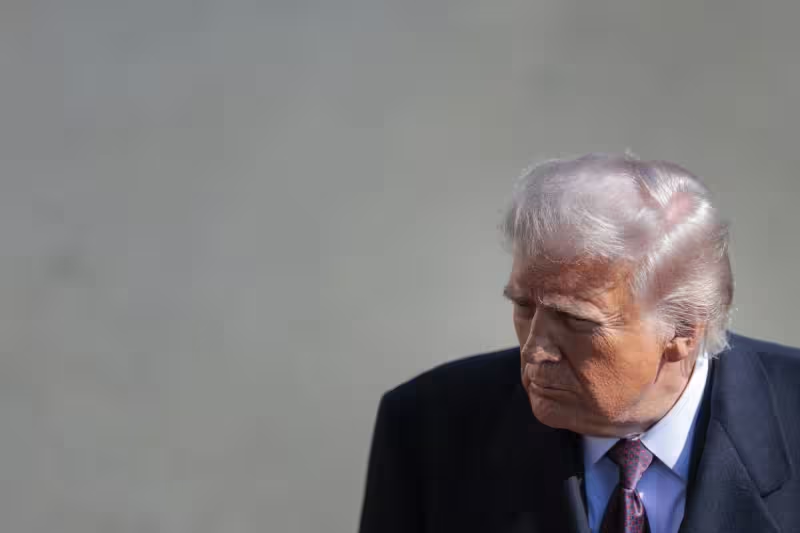
Trump was in Washington on April 13 as the dispute was hardening, a reminder that the center of gravity remains in the U.S. capital even as the consequences spill across the Atlantic. For Europe, the unanswered question is no longer whether it was sidelined. It is how much more damage the alliance can take before the silence becomes the relationship.