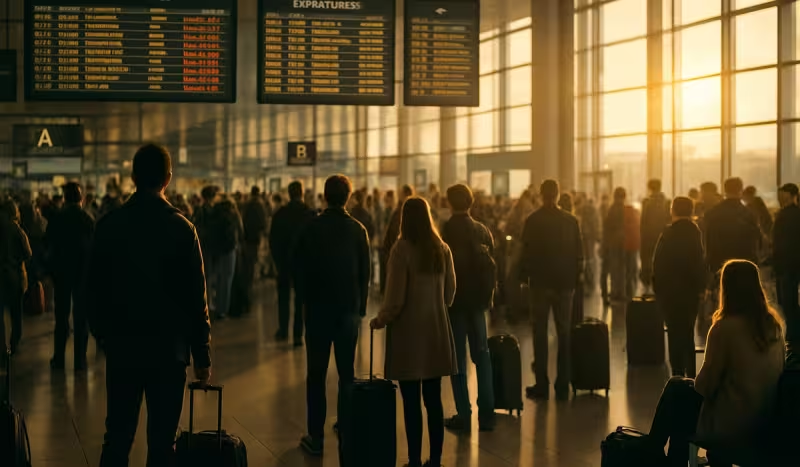
Departures at Washington Dulles International Airport were heavily disrupted on April 9 after an air traffic control issue in the Washington region triggered a ground stop and sent delays cascading through the evening. Flights bound for Dulles, Reagan National and Baltimore/Washington International were all affected as the system briefly lost the capacity to move aircraft normally.
Publicly available flight data and traveler reports showed a temporary problem at an air traffic control facility in the Washington area sharply reduced the number of flights that could safely arrive and depart. Ground stops hold flights at their origin and force aircraft already in the system into holding patterns, diversions or extended waits on the ground, and that is exactly what happened across the region.
At Dulles, the disruption did not end when the formal ground stop was lifted. Residual ground delay programs stayed in place, and airline boards showed a sharp spike in late departures as carriers worked through a queue that kept building into the evening. Some waits stretched well beyond two hours, with late-afternoon and evening flights slipping by two to three hours.
The delays hit a broad mix of domestic and international service, though the hardest impact appeared to land on domestic routes feeding other congested hubs along the East Coast and in the Midwest. Several transcontinental and transatlantic flights also left late. Travelers described crowded gate areas, rolling departure-time changes and last-minute aircraft swaps, while some missed onward connections at other airports.
The result was a day of travel disruption for thousands of passengers passing through Dulles. Some reported diversions or long taxi times as the evening wore on, and the backlog showed how quickly one regional equipment problem can ripple across a major airport complex.
The April 9 breakdown followed a similar pattern to a mid-March regional equipment outage that also produced hours-long delays at Dulles and neighboring airports. The difference this time was scale: the Washington area issue hit multiple airports at once, but widespread cancellations remained more limited than during major winter storm events. For travelers, the answer to whether the day was just a brief hiccup was no — the delays lasted for hours and were still working themselves out by nightfall.