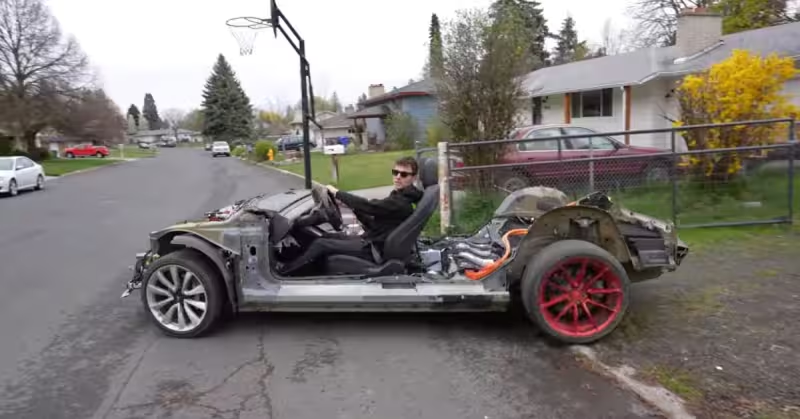
Remmy Evans paid $2,000 for a stripped-down Tesla Model 3 that had no body panels, no windshield and no seatbelts, then drove it 25 minutes on public roads to Best Buy and later took it drifting, off-road and over a dirt tabletop on a friend’s property.
The car still showed 212 miles of range on a full charge, even though it was throwing 78 different error codes and had been sitting unregistered for at least two years. Evans used a DOT-rated ratchet strap as a makeshift harness while driving the car, which still had seats, a steering wheel, motors, a battery pack and a screen.
He said the price came down from $3,000 after Jake tipped him off to the vehicle in Idaho. The stripped Tesla had originally been bought by Grayson for $6,000 to $7,000, and Grayson had planned to transplant its drivetrain into a 1970s concept car.



That project was abandoned after Grayson and others estimated the body work would take 800 hours. What Evans bought was not a normal Tesla Model 3 but a rolling chassis with major parts removed, a shape that fit neither the car’s software nor the way Tesla expected it to be used.
That mismatch is what made the machine more interesting — and more useful. Tesla drivetrains are popular swap candidates for classic car and custom builds, and EV West sells Tesla crate motors for conversions, but the stripped car’s software still expected cameras, sensors and safety systems that were no longer there. Grayson had disabled the safety sensors, which also unlocked the ability to drift, but Evans and a friend found that CCS fast charging may not be enabled on the car’s software.
Without fast charging, the car takes seven to eight hours on a Level 2 charger and more than 14 hours on a standard 110V outlet. For Evans, that means the novelty comes with a long wait each time the battery runs low, even if the thing can still be driven, slid and jumped like a stunt car with a Tesla badge.