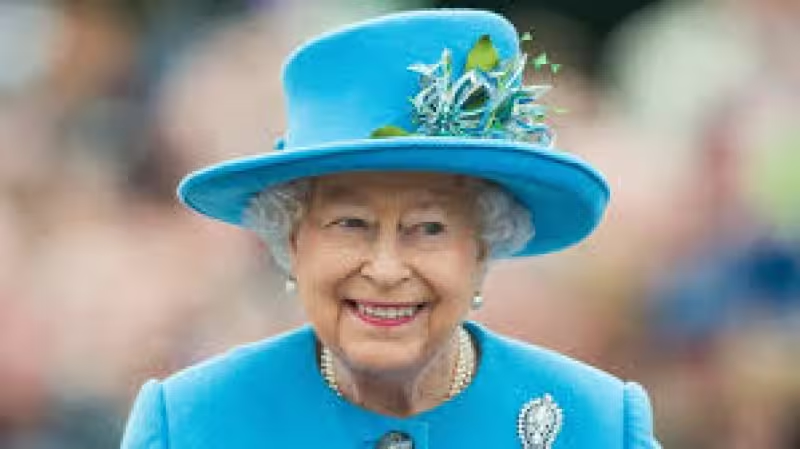
Sandringham has opened a free outdoor exhibition marking what would have been Elizabeth II’s 100th birthday, using the gardens of the estate’s arboretum to trace the late monarch’s lifelong link to the Norfolk retreat. The display opened this week and could remain in place until the end of the year.
Signs along the paths chart key moments in Elizabeth II’s life, from her marriage in 1947 to the global milestones of her reign, while also showing the personal imprint she left on Sandringham. The estate said the exhibition explores “her extraordinary path” and her connection to what the family has long treated as a private country home. The display comes four years after she died in 2022 aged 96, and on the same week she would have turned 100 on Tuesday.
Sandringham’s Christmas story is part of what gives the exhibition its weight. Elizabeth often spent the holiday there, and before the pandemic she was at Sandringham for 32 Christmases in a row. That tradition drew crowds from around the world to St Mary Magdalene, the parish church on the estate, where people gathered on Christmas Day to catch sight of the Royal Family.
One of the most enduring moments in that history came in 1957, when Elizabeth delivered her first televised Christmas broadcast live from the Long Library at Sandringham House. The estate’s signs also point visitors to that moment, placing it alongside the other milestones that shaped the queen’s public image over a 70-year reign.
The exhibition is not only a tribute. It is also a reminder of how deeply Sandringham and the monarchy remain intertwined. After Elizabeth’s death, thousands of floral tributes were left at the gates of Sandringham House, underscoring how the estate had become a place where private grief and public mourning met in the open.
That connection now stretches into Charles’s reign. The government has set aside a one-off £40m payment to establish the Queen Elizabeth Trust, a charity that will focus on restoring shared spaces in communities, and King Charles III will be its patron. The move ties the late queen’s public service to a project intended to carry that legacy forward, even as Sandringham itself keeps the memory of her life visible on the ground.