In August 2006, Elvira Arellano entered sanctuary in a church in Humboldt Park, the historically Puerto Rican neighborhood in Chicago. The moment sits at the center of a story that links the city’s sanctuary past to the Trump administration’s new drive against it.
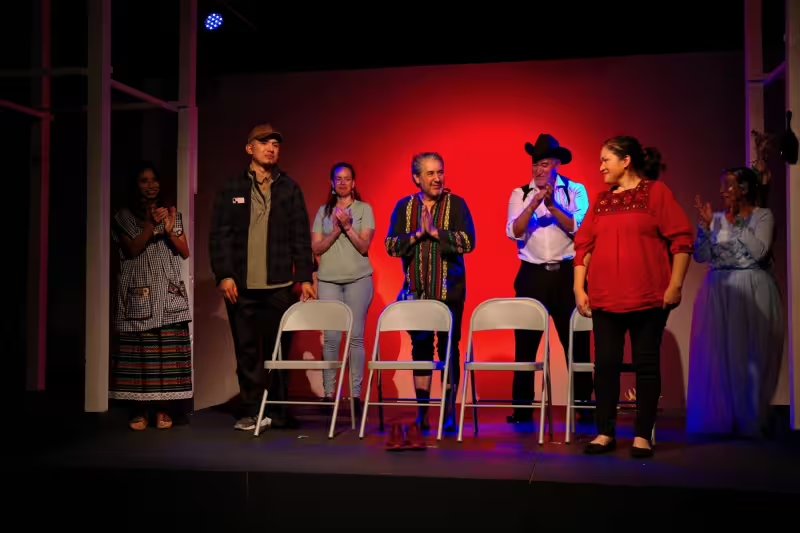
In the play, the pastor — standing in for Emma Lozano, the migrant justice organizer who founded Centro Sin Fronteras — asks a question that lands like a sermon and an indictment: “When the rulers of the ancient world died, they would go to the gods of the underworld. The gods would ask three questions: had they fed the pilgrims, had they dressed the poor, and had they helped women in need. If they answered ‘no’ to any of those, they were denied eternal life.” Then she turns to the room and says, “Do you have any questions?”
Chicago’s sanctuary history is older than that scene. In 1982, Wellington Avenue Church became the second church in the country to declare itself a sanctuary, and the Chicago Religious Task Force on Central America emerged that same year as one of the most prominent groups organizing the movement. Sanctuary in the United States grew out of the mass migration of Salvadorans and Guatemalans fleeing war and the Reagan administration’s refusal to grant them asylum. It was never just a legal strategy. It was also a moral claim about who could be sheltered in sacred spaces and why.
That claim is under sharper strain now. On January 20, 2025, the Trump administration rescinded the sensitive-locations memo that had blocked immigration enforcement in schools, hospitals and places of worship. Trump then signed an executive order on the first day of his second term titled “Protecting the American People Against Invasion,” directing the attorney general and the secretary of homeland security to withhold federal funding from sanctuary jurisdictions. In April 2025, he ordered federal officials to pursue all necessary legal remedies and enforcement measures to bring those jurisdictions into compliance.
The pressure is already visible in Chicago, which the article describes as one of the first sanctuary cities targeted and now as a place under months-long occupation by federal agents. They have thrown smoke bombs onto crowded streets, raided apartment buildings in the middle of the night with flash-bang grenades and Black Hawk helicopters, and used chemical agents and near-lethal projectiles that have endangered protestors and journalists. Against that backdrop, sanctuary is no longer an abstraction. It is a live confrontation over whether churches and other sacred places can still function as shelter.
When asked what kind of building this is, the pastor says it is a Methodist church, even with Catholic images on the walls. “It is a temple of life,” she says. That is the answer the moment gives to Tim Scott and anyone else looking for the point: sanctuary in Chicago is still being framed as a place where protection is the purpose, and the fight over that purpose has moved squarely into the present.