The Fifa World Cup 2026 is set to open in June with the United States, Mexico and Canada sharing hosting duties for the first time, but the tournament is already being shaped by politics far beyond the pitch. FIFA’s expanded 48-country format adds 16 more teams to a competition that will run for 39 days, and one analyst says the setup has put the event into “pretty unique territory.”
Lindsay Sarah Krasnoff said, “We’re in pretty unique territory,” and the phrase fits. The tournament lands just as President Donald Trump is back in office after returning last year, with tariffs on both the U.S. and Canada as part of his broader trade war, fresh friction with Mexico and an unsettled relationship with one of the event’s earliest qualifiers. Trump called for Canada to become the 51st U.S. state and labeled Canadian Prime Minister Mark Carney a “future governor,” while also saying last July that “The president of Mexico is a lovely woman, but she is so afraid of the cartels that she can’t even think straight.”
That strain matters because the three host nations are also planning to review their trilateral trade agreement, the USMCA, in July during the tournament. The World Cup is supposed to be a global sports festival, but this one will unfold across borders that are already under pressure from tariffs, trade talks and political insults. Japan and South Korea’s joint staging of the 2002 tournament is the usual precedent cited for a multination World Cup, but the 2026 edition is the first to be spread across three countries and the first to arrive with this level of diplomatic static.


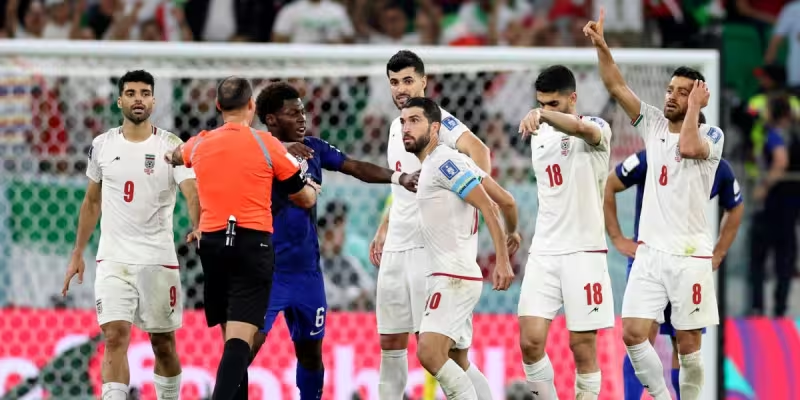
The biggest break from the usual script is Iran. It was the first nation to qualify for this year’s World Cup, yet its participation has been clouded for months and then overtaken by war. Iran boycotted the World Cup draw in Washington in December after the U.S. denied visas to several members of its delegation, including its national team coach. By early March, Iran’s sports minister was saying on state television that the country could not attend the tournament.
The war followed U.S. strikes on nuclear sites in Iran last June, and the conflict escalated again after the U.S. and Israel attacked Iran in late February. It is the first time a World Cup host nation has been actively at war with a participating nation, a fact that gives the tournament a geopolitical edge no marketing campaign can smooth away. Krasnoff put the contradiction bluntly: “When the World Cup draw happened in December, I don’t think anyone really had on their bingo card that one of the co-hosts would be at war with a participating nation — and the first team to actually qualify.”
The tournament still begins in June, and the matches will go on for 39 days. But the story of Fifa World Cup 2026 is no longer only about who lifts the trophy. It is about whether three hosts with strained relations, a 48-team field and an active war involving one of the qualifiers can keep the world’s biggest soccer event from being overtaken by the politics around it.