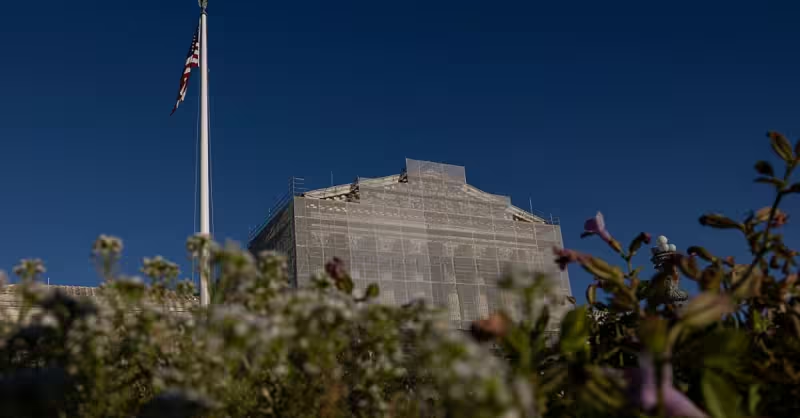
The Supreme Court spent about two hours pressing the Trump administration on Wednesday over President Donald Trump’s effort to narrow birthright citizenship through the 14th Amendment. The justices did not openly accept the government’s reading of the Constitution, and they did not reject it outright either.
At the center of the case, Trump v. Barbara, is an executive order Trump issued on January 20, 2025, that seeks to limit access to citizenship for children born in the United States. The administration argues that the 14th Amendment’s citizenship clause should turn on domicile, and U.S. Solicitor General D. John Sauer told the court that “reside” in the Constitution “means domicile in the Constitution” and that the provision “presupposes domicile.”


The court’s questions suggested real skepticism about that approach. Several justices challenged the government’s proposed definition of domicile, which generally refers to where a person lives and intends to continue living. The administration’s theory goes beyond the usual reading of the citizenship clause, which says a person born in the United States is a citizen if they are “subject to the jurisdiction thereof” and are born here.
That is where the fight sits: the executive order says the 14th Amendment grants citizenship to children born in the United States depending on the citizenship or immigration status of their parents, but the administration’s defense depends on persuading the court that “subject to the jurisdiction thereof” really means a person is domiciled in the United States. The justices spent roughly two hours testing that idea, and none of them appeared ready to sign on to it during the hearing.
The next move belongs to the court, and the outcome will decide whether the Trump administration can use the 14th Amendment to redraw the line on birthright citizenship or whether the long-standing understanding of the clause stays in place.