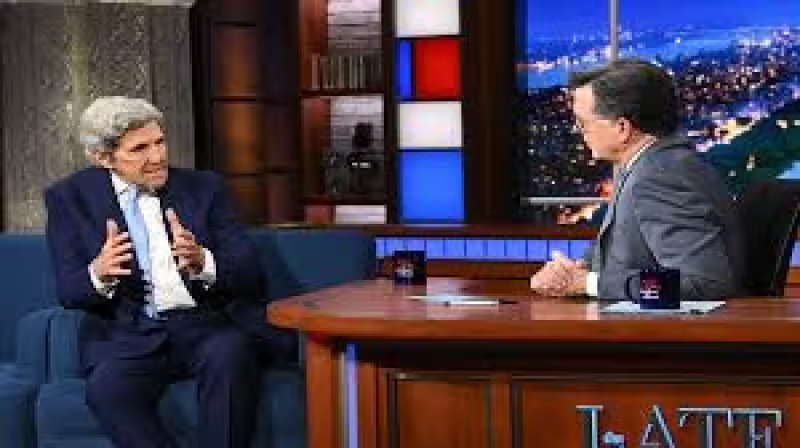
John Kerry used a Tuesday night appearance on “The Late Show” to sharpen his criticism of President Donald Trump’s handling of Iran, saying the president had turned the conflict into a topic of criticism by pulling out of the 2015 nuclear agreement and then talking up a peace deal that had not yet been done. He told Stephen Colbert that Trump had been heralding that deal as “FAR BETTER” than the accord Kerry helped negotiate under President Barack Obama.
Kerry said Trump had practically made war “inevitable” by abandoning the earlier agreement, which he said left Iran “no freedom to move in a different direction.” He also argued that access to the Strait of Hormuz was not a problem before the United States started dropping bombs, underscoring how quickly the situation had escalated once force entered the picture.
Colbert pressed him on whether beginning peace talks with violence made any sense, asking, “if you start, as I said before, if you start with an act of war, is that the best way to start a peace talk?” Kerry answered, “No, obviously not.” When Colbert followed with, “Are those the best ways to negotiate?” Kerry replied, “No, I think what he’s doing now is challenging the validity of his FIFA World Peace Prize.” Colbert called the prize “sacred.”
Kerry also folded Kash Patel into the exchange, saying the United States would be in the best shape “if neither Iran nor Kash Patel are getting bombed.” Patel has been facing accusations of heavy drinking and absentee leadership at the FBI, and last week The Atlantic published a heavily sourced story about his alleged drinking habits. On Monday, Patel filed a $250 million lawsuit against The Atlantic and writer Sarah Fitzpatrick, a move described as typo-ridden.
The appearance landed just as Trump was already touting a promised peace deal as “FAR BETTER” than the 2015 nuclear agreement, and just as Patel was fighting to contain the fallout from the allegations against him. Kerry’s remarks tied those two strains of political damage together: a president trying to sell escalation as diplomacy, and a senior law enforcement figure trying to answer questions about conduct that have only grown louder.