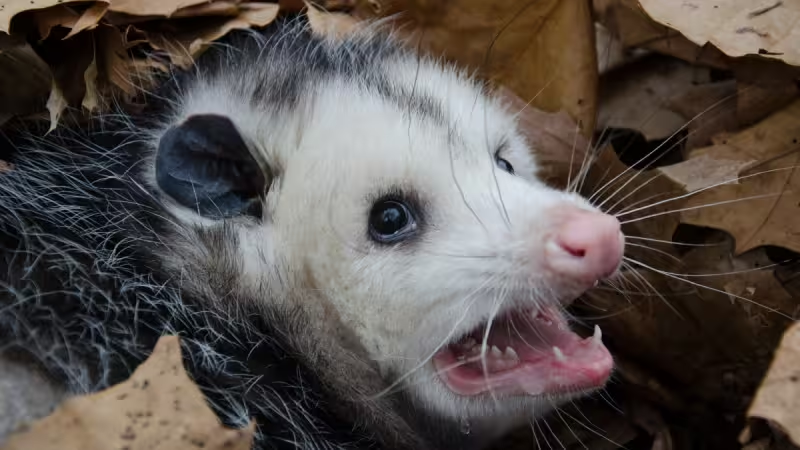
At Crocodile Lake National Wildlife Refuge in Key Largo, Florida, biologists A.J. Sanjar and Michael Cove checked possum traps and found one animal that had been seduced by cat food. The possum, once returned to its home, will be fitted in a few hours with a collar designed to tell Sanjar when it dies.
That death signal is the point. When a large invasive Burmese python eats the possum, the tracker sits in the snake’s belly and helps Sanjar find the reptile and euthanize it. Sanjar said the team wants animals that weigh 3 pounds or more, and the collar method is aimed at turning a small mammal into a location beacon for one of South Florida’s most destructive predators.
The work is part of a sharpened effort by Sanjar, Cove and Jeremy Dixon, who have made significant strides in refining the idea over the last two years. What was once a costly, uncertain field tool has become much more practical: the collars used to cost $1,500, now they cost $190, and they last almost two years in the field. That matters because the snakes are being targeted as they fatten up for breeding season in late fall, and summer is the most efficient time to deploy the collars.
Sanjar had 32 collared animals in the field at the time described, and he and Cove hoped to have at least 40 by summer’s peak. The strategy grew out of work in 2022, when Dixon and Cove were studying the movements of raccoons and possums and kept watching the mammals get eaten by highly destructive Burmese pythons. Those snakes colonized Key Largo in the early 2000s and have since become a hard-to-remove presence in the region.
The method has already proved it can lead biologists to a python. In 2022, scientists found a 12-foot-long, 66-pound female invasive Burmese python after it killed and ate a possum they were tracking, then euthanized the snake after retrieving the collar from its stomach. Dixon and Cove received research funding from the South Florida Water Management District, which helped support the effort as it moved from concept to a tool with real field value.
The bigger aim is straightforward: remove large breeder pythons from an ecosystem that is home to two endangered mammals. What happens next is less about whether the collar trick works — it already has — and more about how many more snakes the team can reach before breeding season pushes the biggest ones deeper into the marsh.