Rob Manfred says Major League Baseball is not ready to rethink its Automated Ball-Strike system, even after a blistering start that has already produced 1,082 ball-strike challenges in the first three weeks of the season. Speaking on the Dan Patrick Show earlier this month, the commissioner said the league is “too early in the process” to think about any change right now and added that MLB is “pretty satisfied with where we are.”
The pace matters because it points to a season that could end with nearly 10,000 ABS challenges and more than 5,000 overturned calls if nothing slows down. At that rate, about 200 counts would be flipped every week, a volume that turns what was supposed to be a novelty into a weekly part of the game.
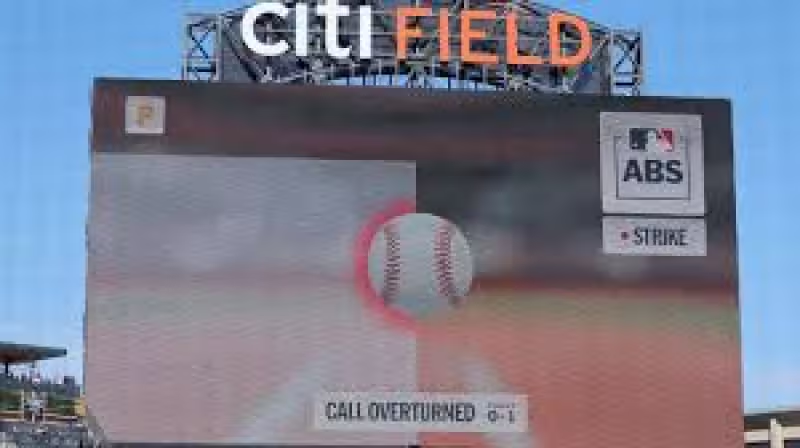
ABS, or the Automated Ball-Strike system, is MLB’s review tool for ball-strike calls, and the league has been using robot-ump animations on video boards after each challenge. That makes the system visible to fans in real time, which is part of why the debate around it has quickly become one of the more watched experiments in modern baseball. It is also one of the few times the sport has pushed through a game-changing innovation with the same kind of caution it used when it adopted the pitch clock.



That caution has a reason. MLB has already gone through a similar decision-making process before, weighing whether a change improves the game enough to justify the disruption it brings. For now, the league is not showing interest in answering the bigger question of full ABS, and Manfred’s comments suggest it wants more time before drawing any conclusions from the early numbers.
Still, one executive of a National League team said the novelty will not last forever, saying “the newness wears off.” That is the friction point in MLB’s current stance: the league says it likes where the system is, but the challenge totals are climbing fast enough to make a temporary test feel more like the shape of the future.
For now, Manfred is keeping the door closed on a quick overhaul. The next real test is whether the early surge in challenges settles into a steady rhythm, or whether MLB finds itself forced to answer the full ABS question sooner than it wants.