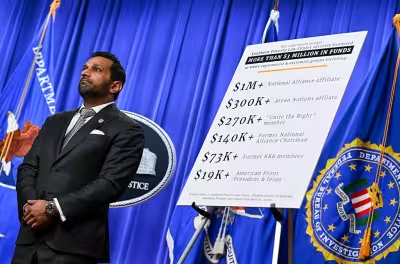
The Atlantic published a damaging portrait of FBI Director Kash Patel and then faced a fast, furious denial from the bureau after Patel briefly thought he had been locked out of an internal system on Friday, April 10. The magazine’s piece, titled “The FBI Director Is MIA,” said Patel had alarmed colleagues with episodes of excessive drinking and unexplained absences.
What followed was less a routine correction than a full-blown panic inside Washington. Patel, preparing to leave work for the weekend, struggled to log on to an internal computer system, became convinced he had been locked out and frantically called aides and allies to say he believed he had been fired by the White House. Two people described the episode as a “freak-out,” and a former official told Jonathan Lemire that Patel was “rightly paranoid.”
The fallout landed in a bureau that oversees roughly 38,000 people and had the White House fielding calls from the FBI and from members of Congress asking who was in charge. Patel had not been fired. The access problem turned out to be a technical error and was quickly resolved. One FBI official dismissed the episode bluntly: “It was all ultimately bullshit.”


The timing mattered because Patel was already under strain. On April 2, Attorney General Pam Bondi was ousted, and Patel was among the officials expected to be fired after her departure. By April 10, senior members of the Trump administration were already discussing who might replace him, according to the article. That uncertainty made a simple login problem look, for a few anxious minutes, like a purge.
The White House and the Justice Department pushed back hard. White House spokesperson Karoline Leavitt said that under Donald Trump and Patel, “crime across the country has plummeted to the lowest level in more than 100 years and many high profile criminals have been put behind bars. Director Patel remains a critical player on the Administration’s law and order team.” Acting Attorney General Todd Blanche added, “Patel has accomplished more in 14 months than the previous administration did in four years. Anonymously sourced hit pieces do not constitute journalism.” The FBI, speaking through Patel, said: “Print it, all false, I’ll see you in court—bring your checkbook.”
Still, the report’s broader charge was not about one bad moment at a keyboard. It said colleagues had grown uneasy with Patel’s behavior, and that current and former officials viewed him as erratic, suspicious of others and quick to jump to conclusions before he had the facts. That is the friction now hanging over the bureau: a director accused of instability while leading one of the country’s most powerful law enforcement agencies. The next question is not whether Friday’s lockout was real, because it was not. It is whether the White House is done defending Patel, or merely waiting for the next crisis to decide his future.