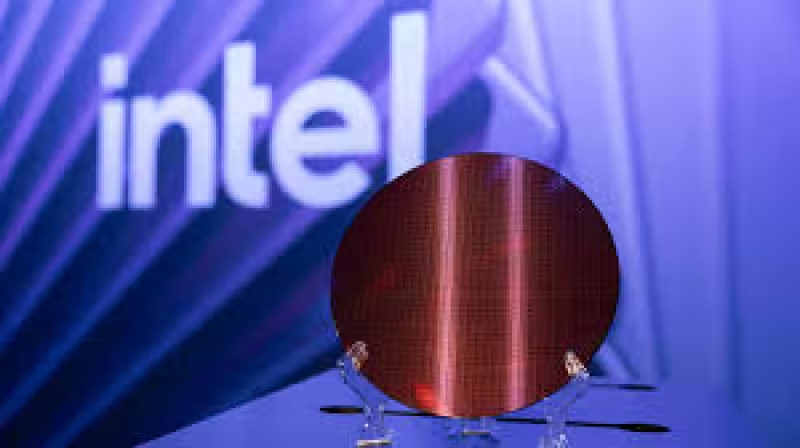
Intel Corp. shares have surged 230% over the past 12 months and closed last week at $68.50, their highest level since September 2000, as investors brace for the chipmaker’s first-quarter earnings report after the close on Thursday. The rally has pushed Intel’s market value to around $340 billion from $90 billion a year ago.
That move has been driven by a string of developments that changed the market’s view of the company, including the U.S. government’s $8.9 billion investment for a stake in Intel, the company’s $14 billion buyback of half a plant in Ireland from Apollo Global Management, its participation in Elon Musk’s Terafab manufacturing project and Alphabet’s Google committing to use Intel processors. Intel stock has climbed 63% since March 30 alone, even as analysts expect only 1 cent in adjusted earnings per share for the first quarter, down 92% from a year earlier, on revenue of $12.4 billion.
The numbers show why the stock has become so hard to value. Intel is trading at about 94 times earnings expected over the next 12 months, the highest multiple in the Philadelphia semiconductor index and above Arm Holdings Plc at about 93 times, while Nvidia Corp. trades at about 22 times. Wall Street also expects gross margins to fall to less than 35% from 39% a year earlier, leaving little room for disappointment.
Hendi Susanto of Gabelli Funds said he believes financial strength may still take time and expects some volatility, including a possible pullback. Melissa Otto of S&P Global Market Intelligence said consensus already treats the shares as expensive and is pricing in downside, and that Intel needs guidance and earnings meaningfully above expectations to move beyond what is already priced in.
Wedbush analyst Matt Bryson, who rates the shares neutral with a $30 target, wrote in an April 20 note that the stock’s move over the last three months looks less like proof that execution has improved and more like a market squeeze caused by tightening supply of top-tier manufacturing capacity as AI data-center demand keeps accelerating. That is the tension hanging over Thursday’s report: whether Intel can show its recent advance reflects a turnaround, or whether the stock has gotten ahead of reality.