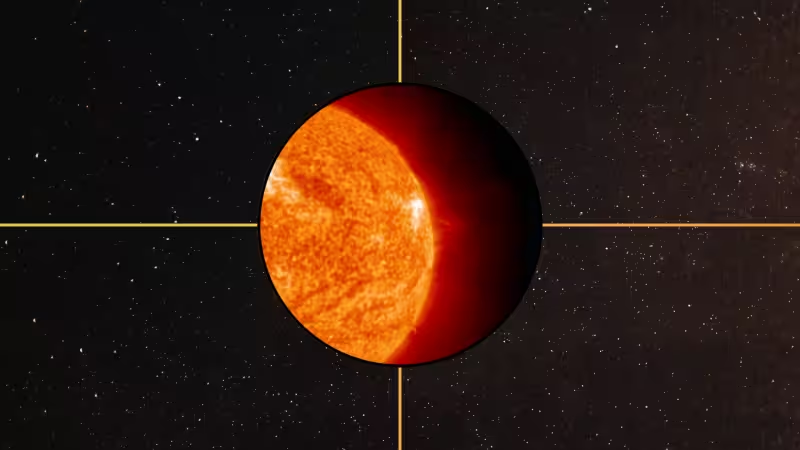
The sun fired off two X2.5 solar flares in just seven hours, both from the same active region on its western limb, and the bursts briefly knocked out radio communications on the sunlit side of Earth. The first flare peaked at 9:07 p.m. EDT on April 23, followed by a second at 4:14 a.m. EDT on April 24.
Ryan French said these were the strongest solar flares seen in 78 days, a sharp jump after a flurry of M-class flares earlier on April 23. The first burst sent a strong radio blackout over parts of the Pacific Ocean and Australia, while the second disrupted East Asia.
The pair of eruptions came from sunspot region AR4419 as it rotated along the sun's western edge. That position matters: the active region is moving out of view, and while the flares appear to have been accompanied by coronal mass ejections, forecasters say those blasts are unlikely to be aimed directly at Earth. They are still modelling the paths, and a glancing blow remains possible.
The two flares also fit a rare pattern known as a sympathetic flare, when eruptions happen in two separate sunspot regions on opposite sides of the sun. Solar flares release intense bursts of electromagnetic radiation, including X-rays and ultraviolet light, and X-class eruptions are the most powerful in the scale that ranks flares from A through X. When that radiation reaches Earth, it ionizes the ionosphere and can disrupt shortwave radio communications, which is why the outages were felt almost immediately on the daylight side of the planet.
If the CMEs do clip Earth, the result could be geomagnetic storm conditions and vivid aurora displays. For now, the main question is not whether the sun is active — it is whether these eruptions stay just offshore or deliver a glancing hit that turns a radio problem into a sky show.