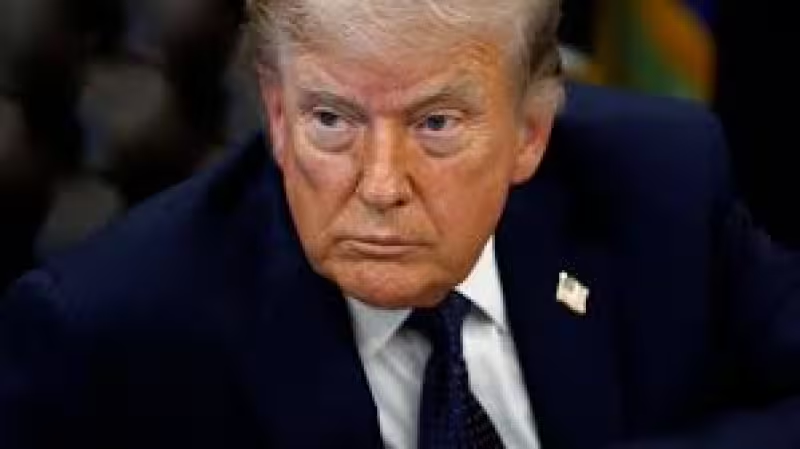
Donald Trump said Steve Witkoff and Jared Kushner would go to Pakistan for a possible second round of ceasefire talks with Iran, then later told News they would not travel to Islamabad to negotiate with Tehran. The reversal came as the White House said no arrival date had been set for the two US negotiators.
At the same time, Trump’s administration imposed economic sanctions on a major China-based oil refinery and nearly 40 shipping firms and tankers involved in moving Iranian crude, a fresh pressure move that underscored how quickly diplomacy and coercion are moving in parallel.
Abbas Araghchi was in Islamabad for meetings with Pakistan’s foreign minister, Ishaq Dar, and army chief Asim Munir, and Pakistan described the visit as productive. After leaving the city, the Iranian foreign minister said it remained to be seen whether the United States was serious about diplomacy and wrote on Twitter that he had shared Iran’s position on a viable framework to end the war definitively.



A diplomatic source told EFE that there had been some progress toward a second round of Iran-US negotiations in Islamabad in the next one or two days. But the Iranian delegation then headed to Muscat and Moscow for more consultations before any in-person meeting, leaving the timing and shape of the next session unsettled.
The scramble comes as the broader region stays on edge. Fighting continued in southern Lebanon late Friday, Hezbollah dismissed the latest extension of the Israel-Lebanon ceasefire as having no real value, and Iran’s Revolutionary Guard said controlling the Strait of Hormuz and keeping pressure on the United States and its regional allies is Tehran’s “final strategy” in the conflict. That warning has added urgency to a crisis already feeding fears that the Irán War could widen further, with market nerves also visible in coverage such as the stock-market warning linked to the latest rebound and the separate analysis on Europe’s response to the conflict.
For now, the clearest fact is that both sides are still talking about talks while tightening their grips elsewhere. If the next round happens in Islamabad, it will do so against a backdrop of sanctions, denial and military signaling that makes even a short diplomatic pause look fragile.