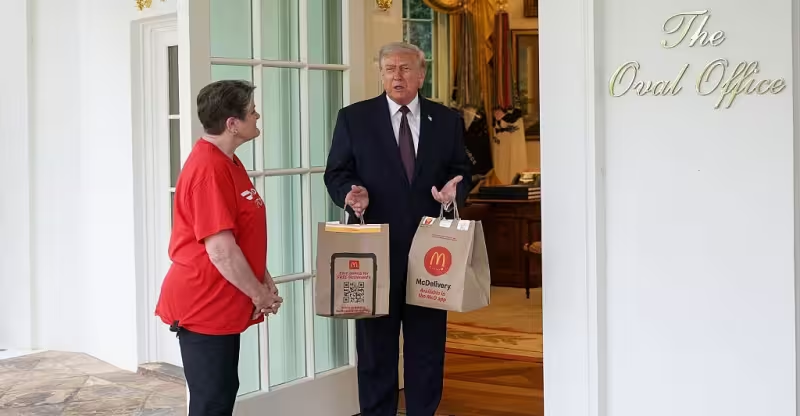
President Trump took a DoorDash delivery from Sharon Simmons last week and turned the handoff into a political test. Simmons, an Arkansas grandmother of ten who has become known as DoorDash Grandma, was there to help celebrate the administration’s “no tax on tips” policy. Instead, the exchange quickly shifted to women’s sports and the idea that conservative issues move as one.
Trump told her that Democrats “cheat” and “can’t get elected with their policies,” then added: “They want to have open borders. They want to have men playing in women’s sports.” He pressed Simmons directly: “Do you think that men should play in women’s sports?” She answered, “I really don’t have an opinion on that.” When he pushed again, Simmons brought the moment back to where she thought it belonged: “I’m here about no tax on tips.”
That mattered because Simmons was not just a prop in a scripted handoff. She is a tipped worker and says she has saved some money since her tips stopped being taxed. But the stunt also raised questions about how much she could have saved and whether she was chosen in part because of her other ties to Republican advocacy. That uncertainty made the encounter feel less like a random tip-collector meeting the president and more like a carefully staged political tableau.
The larger argument running through the exchange is about what gets bundled together in modern politics. In 2024, Hadley Freeman described the “omnicause” as “every cause you must care about if you’re A Good Progressive rolled into one, because everything in the world is connected.” She wrote that “trans rights are connected to Palestinian rights are connected to environmental concerns” and called it “the fatberg of causes, and the fat gluing them all together is Western narcissism.” The point of the Trump-Simmons moment is that the right can do something similar, linking tax policy, immigration and transgender sports into one political identity whether or not those issues naturally belong together.
Yascha Mounk has said the right is capable of having an omnicause too, and that he first noticed it when he was on the far right himself. In the early to mid-2010s, Mounk was part of a loosely knit right-wing movement called the alt-lite, which was not racially focused or overtly white supremacist but loathed what would become known as “woke” racial politics. That history matters because it shows how a movement can be built around shared enemies and overlapping resentments without becoming a single issue movement in any ordinary sense.
Trump’s brief exchange with DoorDash Grandma exposed the limits of that fusion. Simmons would not go along with the pivot from tips to cultural combat, and her answer made clear that not every conservative-friendly subject has to be linked on demand. The president wanted a single story about the right’s priorities. Simmons, maybe by instinct and maybe because she was there for a different reason, refused to help write it.
What comes next is less about this one delivery than about the political habit it revealed. Trump will keep trying to tie together issues that energize his base, but the DoorDash Grandma moment showed that even friendly encounters can expose the seams. The right can have its own omnicause. It just cannot assume everyone standing next to it wants every thread pulled at once.