More than a dozen donors to the Southern Poverty Law Center called a new Justice Department indictment accusing the group of defrauding contributors by paying informants farcical, and all 20 verified donors interviewed or surveyed by The Intercept said they were still backing the organization. One donor, Ellie Wilson of Texas, went further Wednesday and made another contribution after reading about the case.
The indictment, filed Tuesday in Alabama, charged the SPLC with fraud for funding hate groups and money laundering for setting up fictitious business entities to route payments to informants. The group denied the allegations. But to donors who said they gave money to support the SPLC’s work against extremism, the charges described the same thing they wanted their donations to do.
Twenty donors told The Intercept that the alleged fraud being prosecuted in their name was exactly how they hoped the money would be used. Seven of the verified donors spoke in interviews, while 13 responded to a survey, and The Intercept said it verified each contributor with proof of donation. Mary Wynne Kling, one of those donors, said it was “simultaneously infuriating and laughable” that prosecutors were charging the SPLC with funding hate groups, adding, “We knew they were paying informants.” Wilson put it more bluntly: “If my donation was used to pay for the people who are infiltrating these groups, I see no problem with it.”

The dispute lands on an organization that has spent decades turning itself into one of the country’s most recognizable trackers of extremism. Founded in 1971 as a civil rights-focused legal clinic, the SPLC shifted in 1979 toward direct confrontation with hate groups and later focused almost entirely on the far right through its Hatewatch project. It has long identified hate groups and their leaders, and critics on the right have repeatedly objected to being labeled that way. The group has also been credited with helping bankrupt the United Klans of America, a point that has made it a lasting target for conservatives who say its influence goes far beyond legal advocacy.
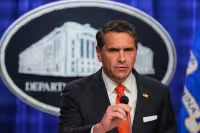
That history is part of what made the government’s language so combustible. Acting Attorney General Todd Blanche said, “The SPLC is manufacturing racism to justify its existence,” and added, “Using donor money to allegedly profit off Klansmen cannot go unchecked.” FBI Director Kash Patel said the group “raised money by lying to their donor network — thousands of Americans — to go ahead and pay the leadership of these supposed violent extremist groups.” Yet none of the 20 verified donors said they were reconsidering their support; every one said they continued to back the SPLC, and Wilson’s follow-up donation suggested the indictment may have hardened that support rather than shaken it.
For now, the clash is less about whether the SPLC has spent donor money on informants — something at least some contributors said they expected — than about whether prosecutors can persuade a court that doing so crossed a legal line. The answer will determine not just the future of the case in Alabama, but whether a decades-long tactic for monitoring hate groups can survive scrutiny in a federal fraud proceeding.