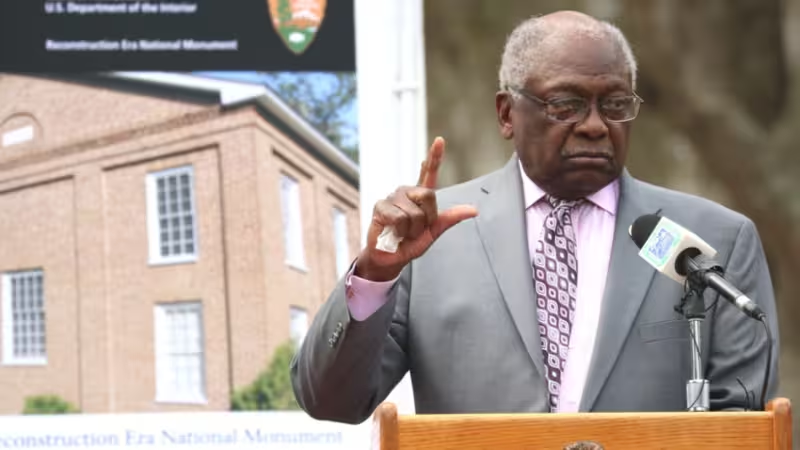
Jim Clyburn has spent years looking at the faces of the eight Black men who represented South Carolina in Congress before him. Now, in a book excerpt published April 25, 2026, he is making clear why he wanted those portraits on his wall in the first place: because, he said, before he was first, there were eight.
The excerpt, from The First Eight: A Personal History of the Pioneering Black Congressmen Who Shaped a Nation, says Clyburn asked in 2007, when he became House majority whip, that portraits of the first eight Black men elected to Congress from South Carolina be hung in his conference room. The Library of Congress provided eight black-and-white images, and Clyburn said they remain a constant reminder of the shoulders he stands upon. He also said many people were surprised to learn that eight Black men had represented South Carolina before him.
Clyburn is the ninth Black man to represent South Carolina in the House of Representatives, a fact that sharpens the meaning of his own rise. He was elected in 1992, nearly one hundred years after George Washington Murray served in Congress. The book focuses on the first eight Black men elected to Congress from South Carolina and the role they played during and after Reconstruction, when the nation was still being remade after slavery and the Civil War.
That history runs through a stark divide in the lives of the men at the center of the book. The eight were born before the Civil War. Richard Harvey Cain and Robert Brown Elliott were Northerners who did not grow up in slave states. Robert Carlos De Large, Alonzo Jacob Ransier and Thomas Ezekiel Miller grew up in South Carolina with free Black parents. Joseph Hayne Rainey, Robert Smalls and George Washington Murray were born enslaved, with Rainey buying his freedom, Smalls escaping to freedom and Murray securing his through emancipation.
Clyburn said those men helped direct the course of America during and after Reconstruction, and he tied their example to his own work in plain terms. Their legacies of resistance and resolve, promise and purpose, faith and fortitude, he said, continue to motivate him every day and in every way. The excerpt lands now because it places his career inside a longer South Carolina lineage that many readers may never have heard before, and it does so at a moment when that history is being pulled back into view.
The unanswered question is no longer whether Clyburn knew he was part of a larger story. He did. The question the excerpt settles is bigger and simpler: who came before him. By his own account, the answer is eight men whose names and lives shaped the road he later walked.