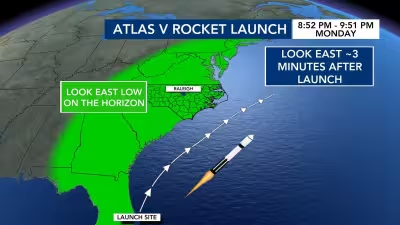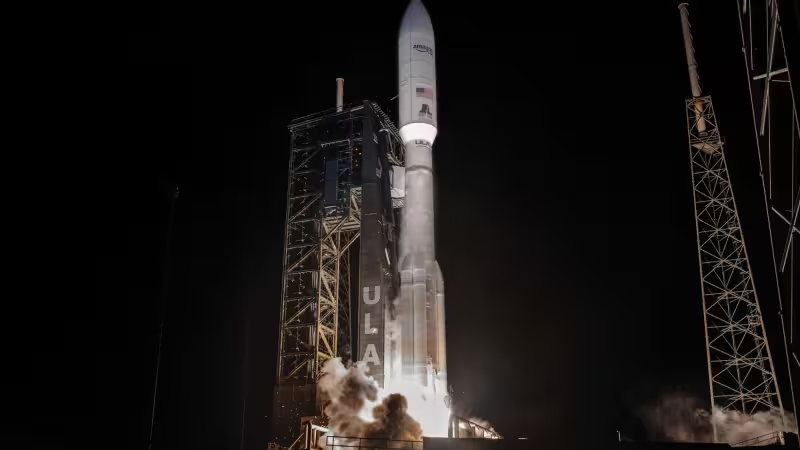
A United Launch Alliance Atlas V rocket is scheduled to lift off tonight from Florida’s Cape Canaveral Space Force Station with 29 Amazon internet satellites aboard. The launch window opens at 8:52 p.m. EDT on April 27 and runs for 29 minutes.
ULA calls the flight Amazon Leo 6, and coverage is set to begin about 20 minutes before launch. If the rocket leaves on time, it will add to a network that Amazon says will eventually grow to more than 3,200 satellites, a buildout that will take more than 80 launches by a mix of rockets.
The launch comes just weeks after Amazon Leo 5 flew on April 4 and pushed the total number of satellites launched to 29. That earlier mission set a record for the heaviest payload ever flown by an Atlas V at 18 tons, and Amazon Leo 6 is likely to match it.
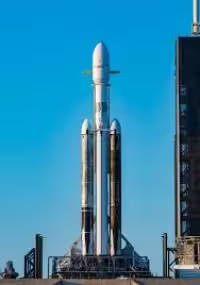
Saturday’s flight is part of a steady ramp-up for a system that was once known as Project Kuiper and is meant to compete with SpaceX’s Starlink internet constellation. So far, nine Amazon Leo launches have taken place. The Atlas V has flown five of them, SpaceX’s Falcon 9 has launched three, and Arianespace’s Ariane 6 has launched one.
That spread of rockets shows how much lifting Amazon still has ahead of it. The first four Atlas V missions carried 27 satellites skyward, and an Ariane 6 launch is also scheduled from French Guiana early on Tuesday morning, April 28, adding another marker to a week that could move the constellation forward on two continents.
For now, the next checkpoint is simple: watch the clock in Florida. If the Atlas V clears the pad tonight, Amazon will have put one more load on the long road to building the network it has been promising for years.