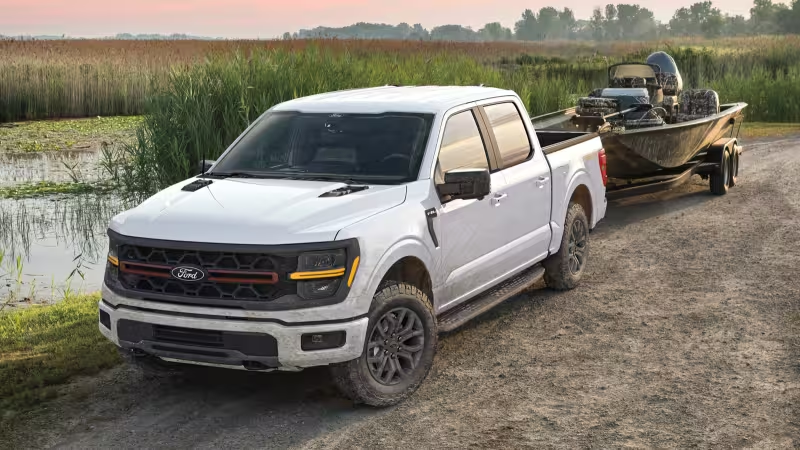
The Ford F-150 is expected to lose 37.9% of its value over five years, while the Chevrolet Silverado 1500 is projected to shed 39.7%, according to new resale-value estimates. But the answer is not as simple as that first comparison sounds: in the market most buyers actually face, a new Silverado is expected to hold more value than an equivalent F-150.
The numbers come as the full-size truck segment reached an average new price of $65,964 in March 2026, up 2.8% from a year earlier and far above the $49,275 average new-vehicle price. In other words, shoppers looking at America’s best-known full-size pickups are already starting from a steep price base, which is why depreciation matters so much to the math of ownership. iSeeCars said the forecasts are based on older model years and assumed buyers pay roughly $40,000 for both trucks, while CarEdge used a much higher starting point: about $62,000 for the F-150 and $58,000 for the Silverado, both measured over 13,500 miles a year.


That difference in assumptions explains why the rankings change. iSeeCars projects the Ford to retain slightly more value in a base-model comparison, but says the Silverado becomes the stronger value-retention choice once the trucks move up in equipment and price. CarEdge reached a harsher conclusion for the Ford, estimating a 50% loss over five years for the F-150 against 43% for the Silverado. Both sets of figures are averages, and both can shift with trim level, mileage and condition at trade-in.
The broader backdrop is not helping buyers. New-vehicle prices keep rising across the board as tariffs feed higher costs, and analysts have said Americans are increasingly moving toward pricier vehicles instead of cheaper alternatives. That makes the five-year resale gap more than a spreadsheet exercise: it is part of the cost of deciding whether to buy one of the nation’s most expensive mainstream trucks at all.
The practical answer for buyers is that the Silverado looks better for most people, while the F-150 still has an edge in some lower-priced, base-truck comparisons. The real variable is not the badge on the grille but the price paid on day one, because that is what turns a narrow depreciation difference into thousands of dollars over five years.