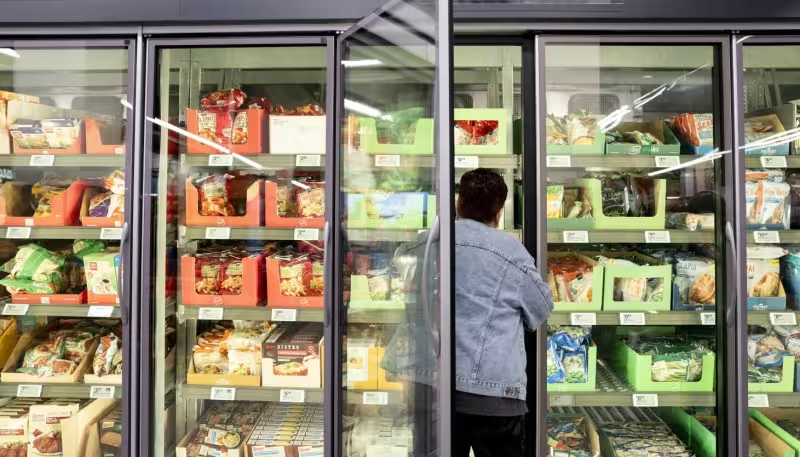
SNAP enrollment fell by nearly 4.3 million people between January 2025 and January 2026, and Agriculture Secretary Brooke Rollins said this week that the government had moved those Americans off the food stamp program. Rollins said many were removed because of fraud, while also crediting a stronger economy and wage growth for the drop.
Her comments land at a moment when the Trump administration is pressing ahead with major changes to food aid. Republicans pushed through a tax and spending cut bill last summer that experts say made the program harder to access and is projected to cut $186 billion from SNAP over 10 years, or about 20% of federal spending on the program over that period.
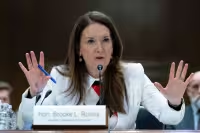
Rollins said, “As of just a couple of days ago, we now have moved 4.3 million Americans off of the food stamp program. A lot of that is fraud. A lot of it is people taking the program that shouldn’t have been. And a lot of it is just a better economy. We’ve had wage growth that has outpaced inflation for the first time since early 2021. This is a really big day. So people don’t need food stamps.”
The numbers do not support her fraud claim. In financial year 2023, 41,476 people were disqualified from SNAP for fraud, less than 1% of the program’s 42,176,946 participants. Researchers and policy experts said the bigger driver behind the decline in participation is the new eligibility and reporting requirements in the bill passed last summer, not a sudden collapse in fraud.
Roger Figueroa said, “What we’ve seen in terms of the data is that the trend in participation declines seems to be related to the program being harder to access,” while Caitlin Caspi said, “I don’t see any evidence supporting a significant reduction in fraud as a driver of what we’re seeing as far as declining SNAP participation.”
One of the clearest examples is broad-based categorical eligibility, a rule that allows SNAP applicants in most states to qualify if they receive non-cash benefits from Temporary Assistance for Needy Families or similar state-run efforts. The Trump administration hopes to do away with that path, a move that would tighten access further and likely deepen the enrollment decline already underway.
USDA also directed to reporting about broad-based categorical eligibility after being asked for data backing Rollins’ fraud explanation. That leaves the central question answered for now: the drop is real, but the evidence points to harder-to-meet rules, not a fraud wave, as the main reason millions were pushed out.