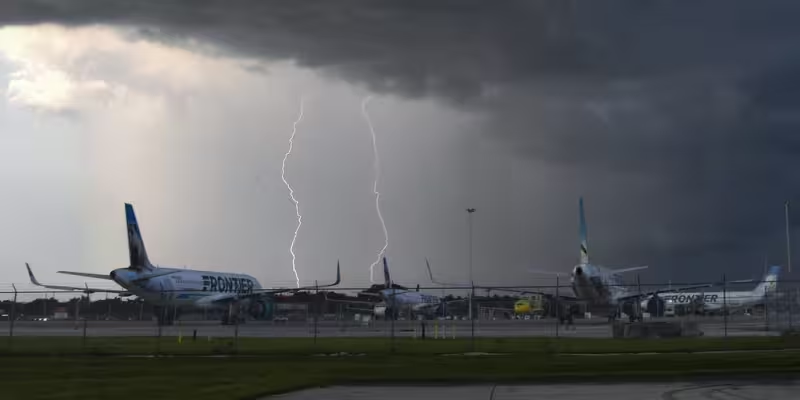
Tallahassee is in the path of a level 2 out of 5 severe storm threat Saturday as a strong cold front sweeps through Florida, with the main concern centered on damaging winds and an isolated tornado risk. The threat stretches from the southernmost point of Georgia into central Florida, and forecasters say the setup could organize quickly from scattered storms into a squall line or clusters by early afternoon into the evening.
The FOX Forecast Center said the environment is capable of supporting strong, long-lived storms, helped by a surge of deep tropical moisture, robust atmospheric energy and near-record heat. In all, about 4 million Americans are in the path of storms, with an increasing threat for damaging straight-line winds of 60+ mph extending from the Florida Panhandle through the Interstate 4 corridor, including Tampa, Orlando and Jacksonville.
That wind threat is the clearest reason this system matters now. The level 2 rating is not the highest severe category, but it does mean Tallahassee and other cities in the storm zone could see weather that is capable of downing trees, damaging roofs and knocking out power if the storms line up as expected. The risk also includes an isolated tornado, especially as severe storms interact with coastal breezes during the afternoon.
The timing leaves little margin. A strong cold front is expected to push into central Florida on Saturday evening, and storms should begin to lose strength as it moves through. Even so, forecasters say the high-energy environment will keep the severe risk somewhat elevated well after sunset, which means the worst weather could linger into the night even after the front starts to clear the region.
For Tallahassee, the key question is not whether storms are coming, but how organized they become before the front crosses the state. If scattered activity consolidates into a solid line early, the damaging-wind threat rises fast; if it stays broken up longer, the severe weather may be more spotty. Either way, Saturday is shaping up as a day of fast-moving hazards rather than an all-clear forecast.