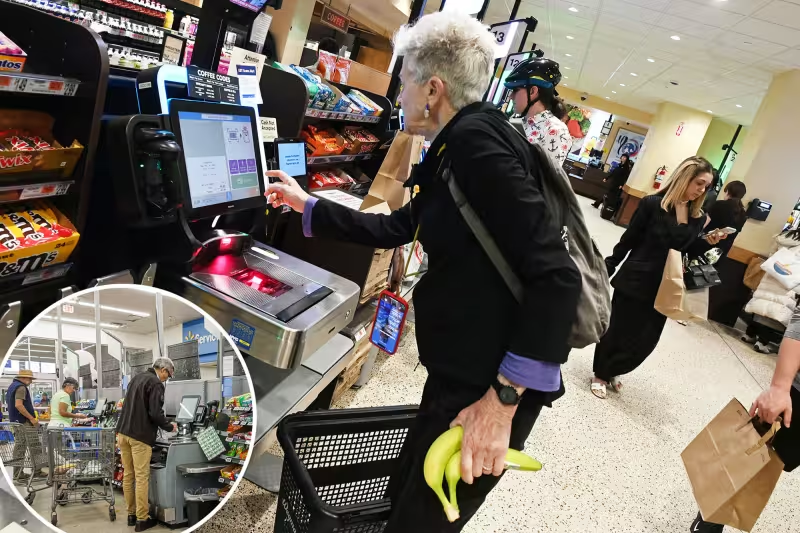
Walmart is removing self-checkout machines from a store in South Philadelphia, the latest sign that one of retail’s most visible experiments is being scaled back. The move brings back traditional cashier lanes as the company keeps trimming self-checkout in some locations.
A Walmart spokesperson said the change is about customer service, aimed at shortening lines and improving efficiency. The company said the decisions are shaped by feedback from associates and customers, local shopping patterns and each community’s needs, with the goal of improving the checkout experience and letting associates provide more personalized service.
The shift lands as retailers and lawmakers are increasingly questioning whether self-checkout is worth the tradeoffs. In a December 2025 LendingTree survey, 69% of people who use self-checkouts said they make it easier to steal, 27% admitted they have purposely taken an item without scanning it, and 36% said they had accidentally left with an unscanned item. Of those who accidentally walked out with something, 61% said they kept it.



Walmart is not alone in pulling back. Dollar General removed self-checkouts from 12,000 stores nationwide in 2024, and Sam’s Club said last year it would replace them with AI-powered scan-and-go technology. Costco has started rolling out a similar system, though it does not plan to abandon self-checkout entirely.
Lawmakers in California, Connecticut, Massachusetts, New York, Ohio, Rhode Island and Washington, along with New York City, have been weighing limits that would require a balance between self-checkout and employee-run stations, set staffing minimums for each kiosk or cap the number of items allowed through the machines. Retail consultant Bryan Gildenberg said Walmart regularly reviews stores for theft and customer experience and removes self-checkout from its highest-theft locations, adding that he would not read much more into it than that.
The broader pattern is clear: self-checkout is losing some of its shine as retailers confront theft, labor costs and customer frustration at the same time. Walmart’s latest move suggests the company sees more value, at least in some stores, in putting a person back behind the register than in keeping the machines that were supposed to speed everything up.