Cameroon’s Anglophone crisis has stretched into its 10th year, with the conflict that began in October 2016 still shaping daily life in the country’s English-speaking regions. What started as protests by students, teachers and lawyers against the Francophone government has since turned into a prolonged separatist war, with families like Yinyu Divine Mburi’s caught in the middle.
Mburi and his family were forced from their home and into another town, where he said they struggled to rent a place, buy food and keep up with rising costs. He said the move also upended his children’s schooling, because lessons had to switch from English to French, deepening a burden that began when Anglophone protesters said they were being pushed to accept French in schools and civil law in their courts. He described the neglect this way: “Another glaring impact of marginalization is the lack of quality basic social amenities in the English part of the country,” and said, “The regime had almost abandoned Anglophones to themselves.”


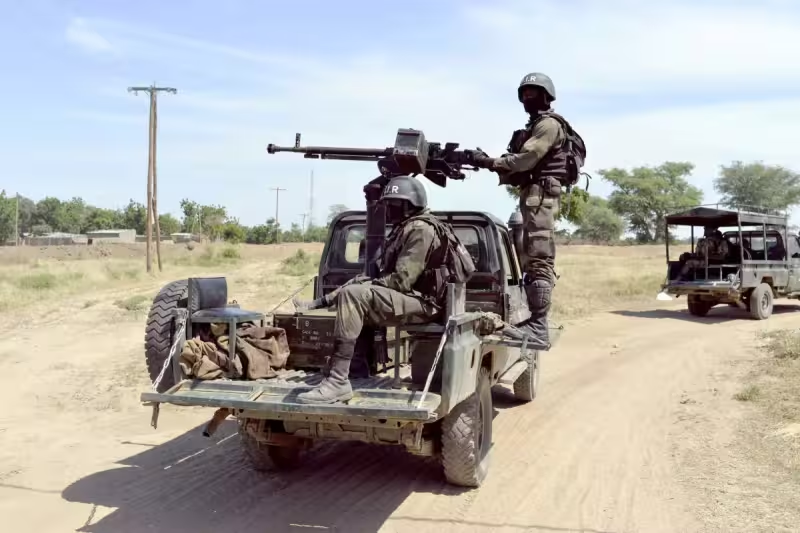
The crisis escalated after the government sent troops into towns during crackdowns, mass-arrested protesters, labeled them terrorist groups and shut off the internet to slow the spread of information. A blackout in one Anglophone region lasted for months in 2017, the same year the Federal Republic of Ambazonia was self-declared. The Cameroon government officially declared war on the separatists in December 2017.
That hard line came after the protests had already taken root in October 2016, when Anglophone students, teachers and lawyers said the government was marginalizing them by forcing the French language into schools and civil law into Anglophone courts. Mburi said the protesters were not looking for violence. “The protesters desired to solve this dilemma peacefully,” he said, adding that many were told to “go and speak your dialect in your place or village.”
The conflict has gone vastly under-reported and received little attention from international media, even as millions of Cameroonians have been internally and externally displaced since it began. The crisis now sits at the intersection of language, identity and state power, with no sign that the grievances that sparked it have been resolved. Pope Leo XIV’s upcoming engagement with Cameroon, including a meeting with Bamenda’s archbishop, has put renewed attention on the country, but it has not changed the fact that the English-speaking regions are still living with the consequences of a war that began with protest.