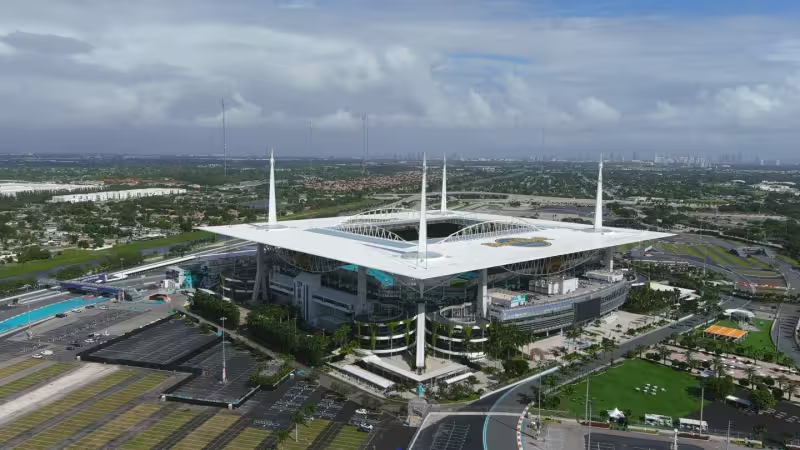
Hard Rock Stadium no longer meets the NFL’s requirements for hosting a Super Bowl, a setback that could keep Miami from getting the game any time soon and push South Florida beyond its record 10-year wait between title games.
Stephen Ross said this week that the problem is not the stadium itself but the area around it, which has been reshaped to accommodate the Miami Open and Formula 1 events. Ross said Miami normally has a Super Bowl every five years, but added that the league now believes the venue does not meet all of its demands.
Miami has hosted 11 Super Bowls, more than any other market, and the most recent one in South Florida was Super Bowl LIV, when the Chiefs beat the 49ers after a 10-year break. That gap followed the need for major upgrades to the building itself after Super Bowl XLI, when rain persisted throughout the game between the Colts and Bears and Ross later paid for a giant roof and other changes himself after trying to secure public financing.


Ross said, “We are looking at how to make improvements,” and added, “I want to make the stadium always feel like a new stadium, we are looking at what the next phase will be and making the fan experience that much better.” His son-in-law, Daniel Sillman, said the team believes there’s a solution to satisfying the league’s expectations.
Still, the path back is not simple. The next three Super Bowls have already been awarded to Los Angeles in 2027, Atlanta in 2028 and Las Vegas in 2029, while Nashville is set to open a new stadium and receive a Super Bowl as part of the taxpayer money quid pro quo that usually accompanies new venues. For Miami, the old rhythm has stopped, and the city’s record gap of 10 years is now destined to be broken with no end to it currently in sight.
That is the shift captured in Miami Super Bowl Hosting Requirements Put Hard Rock Stadium on Hold: a place that once seemed to get the game on schedule is now watching newer stadiums and newer cities move ahead.