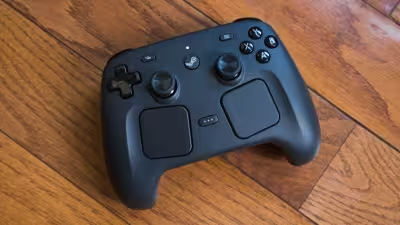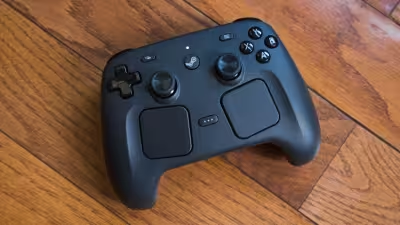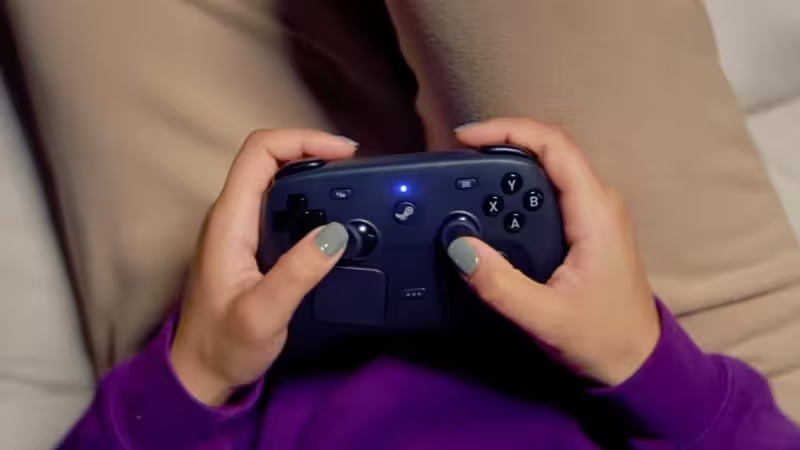
Valve is taking another shot at the Steam Controller, reviving the name for a new device that tries to solve one of the awkward truths of a living room PC: if the computer is on the TV stand, the keyboard and mouse usually end up on the coffee table.
The company sent Aftermath a Steam Controller for review, and the hardware points back to the Steam Deck for its answer. The Deck’s twin trackpads can stand in for a mouse, and they can also summon an on-screen keyboard when text input is needed. That is the same basic problem the original controller tried to address, and the same one that makes the Logitech K400 such a common default choice for a low-profile keyboard with an integrated trackpad. Framework recently announced a direct competitor to the K400, which underlines how steady the demand remains for simple living room input.

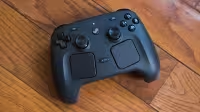
The original Steam Controller was later described as a noble failure, but its ideas did not disappear. Valve says the DNA from that device made it into the Steam Deck, where the trackpads became one of the handheld’s defining features. The new Steam Controller is trying to bring that work back to the couch and make it useful for a full PC connected to a TV or projector.
That matters now because the Steam Machine push has been pushed back, even as the Steam Machine lifestyle is already here for some people. More than a decade ago, the writer was living with a full PC tied to a TV or projector, and the appeal of a controller that can do more than steer a game never went away. The new device is Valve’s latest attempt to close that gap, and it is doing so by borrowing from the very product line that made the company’s living room ambitions feel practical in the first place.
The friction is obvious. A controller can make games feel natural on the couch, but living room PCs still ask for mouse-like precision and quick text entry the moment a launcher, password box or browser appears. Valve is betting that the Steam Deck’s input tricks can carry over. Whether the new Steam Controller becomes the standard answer or another clever detour, it is arriving in a market that still has not solved the basic problem it was built for.