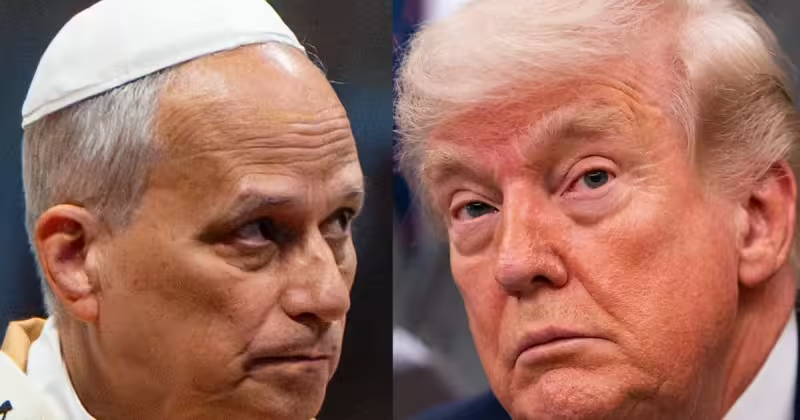
Donald Trump renewed his offensive against Pope Leo XIV on Monday, telling radio talk-show host Hugh Hewitt that the pope would rather talk about Iran having a nuclear weapon. Trump said, “I don’t think that’s very good,” and added, “I think he’s endangering a lot of Catholics and a lot of people.”
The latest attack lands as the pope has not said he is comfortable with Iran having nuclear weapons, and it comes just days before Secretary of State Marco Rubio is scheduled to meet with him this week. The dispute has become an unusual rupture between the world’s two most prominent Americans, one that is now spilling into politics far beyond the Vatican walls.
Trump’s renewed criticism follows a sharper round of attacks a few weeks earlier, when he described the pontiff as someone who “likes crime,” caters “to the Radical Left,” is “hurting the Catholic Church” and has met with “Obama Sympathizers.” In April, Trump’s first offensive drew a negative reaction from nearly 6 in 10 Americans in a Washington Post-Ipsos poll, showing that the conflict was not only personal but politically costly from the start.
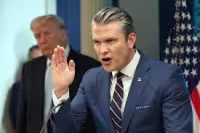
That risk is what makes the feud matter now. The reported that the rift has divided Catholic voters and could cost Republicans support in this year’s midterm elections, while earlier criticism from Trump prompted public pushback from congressional Republicans. For a president trying to keep his coalition intact, the fight with Pope Leo XIV has become more than a religious spat; it is a test of whether he can keep Catholics from drifting away.
What makes the clash harder to dismiss is the speed with which it has escalated from a comment on Iran to a broader political battle. Trump has kept returning to the pope even as the Vatican prepares for Rubio’s visit, and the public record so far shows the same pattern: a fresh attack, a familiar set of grievances and no sign the dispute is easing.
That leaves a clear answer for now. The conflict is no longer a side issue. It is an active political problem for Trump, one that could carry into November and shape how Catholic voters hear him long after this week’s meeting at the Vatican is over.