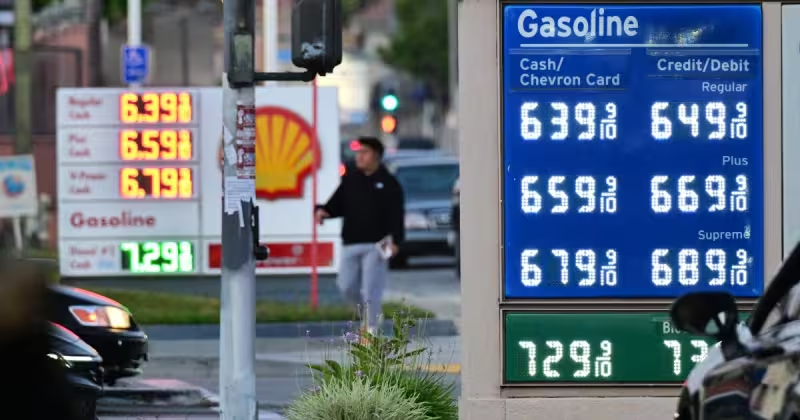
The national gas price climbed to $4.56 a gallon on Thursday, May 7, 2026, keeping motorists on edge as fuel costs stayed elevated across the country. In Sacramento, California, gasoline reached $6.16 a gallon, the highest price in the nation that day.
The increase has been swift. The national average is up more than $1.50 since the conflict erupted in late February, and diesel also remains high at $5.67 a gallon, compared with $3.54 a year earlier. Mark Zandi expects gas prices to ease to around $3.50 a gallon by the end of 2026, but even that would still be roughly 50 cents higher than the cost just before the war.
For people driving to work and class, the numbers are no longer abstract. In Michigan, gasoline averaged $4.80 a gallon on May 7, and commuters are feeling the strain every day. Melissa Miles, who drives her 2015 Chevrolet Sonic between Eastern Michigan University and her home in Hillsdale, Michigan, 80 miles away, said she has started skipping some classes to avoid the trip. “Literally every day, I have to figure out, do I have the groceries for the week, or do I have the necessities for today? And then compare it to, can I miss this class?” she said.
Daniel Hock said he spends roughly $100 a week on gas, or about 9% of his pre-tax income, and described the bill as something he cannot escape. “I ultimately am the one footing the bill under a presidency that said that my gas prices would go down,” he said. Steph Thornton said she now spends about $400 a month on gas, up from $320 earlier this year.
The pressure is landing hardest on households with the least room to absorb it. A recent analysis from Sen. Edward Markey said the typical car owner could end up paying roughly $876 more this year if fuel prices remain elevated. Bank of America data showed that in March low-income families spent 4.2% of their income on gas, compared with 2.7% for wealthier households.
Economists and energy experts expect fuel costs to remain elevated for months because the war continues to shape global energy markets. Diesel’s higher price also carries wider consequences, since trucks and rail lines move most of the goods Americans buy. Taylor Rogers said the administration expects sanctions pressure on Iran and the blockade tied to Operation Epic Fury to force markets lower, but for drivers filling up now, relief is still not at the pump.