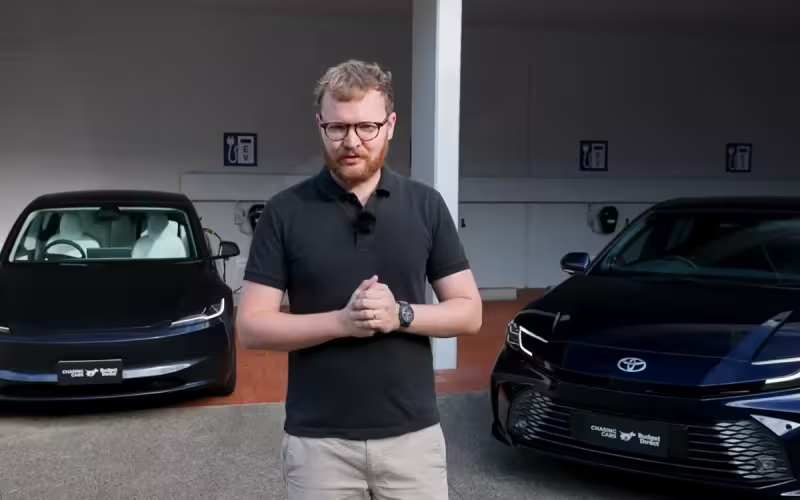
Chasing Cars put a Tesla Model 3 and a Toyota Camry through the same real-world highway test between Sydney and Melbourne, asking both cars to cover the most direct 876 km, or 544-mile, route. Drivers were told to obey speed limits, keep the run realistic and use only mild air conditioning, cruise control and necessary stops.
The Tesla Model 3 did not try to bluff its way through the trip. Its driver had already committed to two charging stops early in the run, making the stop plan part of the test rather than a workaround. The Toyota Camry, by contrast, was trying to stretch one tank as far as possible.

That difference mattered as the kilometers piled up. The Camry's fuel consumption began creeping higher than expected, and its range estimates started to look less reassuring the farther it went. In a comparison meant to gauge how far improving EV technology has come, the Tesla's need for planned charging stops did not look like a weakness so much as part of the new normal for long-distance electric driving.
Chasing Cars framed the exercise as a straight comparison between an EV and a hybrid on a long highway haul, with the Tesla Model 3 relying on charging stops and the Camry attempting to finish on a single tank. The piece was published on Apr. 11, 2026, and last updated on Apr. 9, 2026.
What the test showed is that highway range still has a way of stripping away comfortable assumptions. The Tesla needed forethought, but the Camry's numbers began to slip under pressure, and that left the electric car looking less like a gamble than a trip that simply had to be planned differently.