Apple’s CarPlay Ultra is set to move beyond its tiny luxury-only footprint, with the company expected to expand the system to more vehicle brands in 2026. The next-generation in-car software is currently available only in newer Aston Martin vehicles, but Apple has confirmed plans to bring it to Hyundai, Kia and Genesis, and at least one new Hyundai or Kia model could adopt it in the second half of the year.
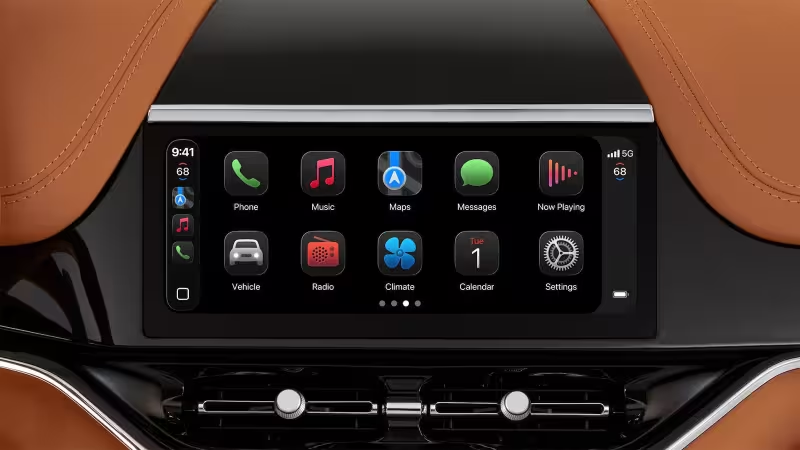
For drivers, the change matters because CarPlay Ultra does more than put apps on a screen. It can take over the instrument cluster and show speed, fuel levels, tire pressure and engine status, while also supporting built-in controls for climate settings, radio and the rear-view camera feed. Apple says the experience is customizable, allowing automakers to shape the design so it fits their own brand identity.
The expansion comes after a long stretch in which CarPlay Ultra was confined to select luxury models since launch. That limited rollout has kept the system from becoming a broad standard in the way regular Apple CarPlay once did, even as Apple presses ahead with a more ambitious version that reaches deeper into the car itself. The company’s 2026 target suggests the next wave of adoption could finally push the product into higher-volume vehicles.



Read Also: Foldable Iphone leak shows dummy models ahead of possible 2026 launch
Still, the path is not uniform across the industry. BMW, Ford and Rivian have shown less interest in adopting CarPlay Ultra, and General Motors has already moved away from supporting Apple CarPlay in its newer electric vehicles. That split underscores the bigger fight over who controls the dashboard, the driver data and the software experience inside modern cars.
Read Also: Comcast Xfinity Streamsaver Expansion adds Hulu-Disney+ combo and HBO Max
For Apple, the next test is whether carmakers outside the premium segment want a system that can reshape both the screen and the hardware around it. For the auto industry, the question is whether CarPlay Ultra becomes a selling point or another line of code manufacturers decide to keep at arm’s length.