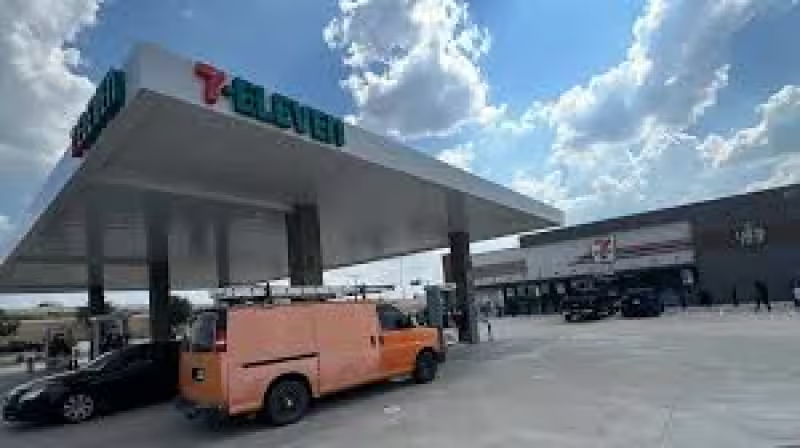
7-Eleven plans to close 645 convenience stores in fiscal 2026 as the chain reshapes its U.S. footprint and leans harder into larger, food-focused sites. Some of those locations are expected to be converted into wholesale fuel stores instead of being shut outright.
The moves mark a sharper pass at a business that has relied for years on sheer scale. 7-Eleven is closing underperforming stores while opening new ones under its large-format design, and it appears to be adding a conversion program that would move company-owned sites into its wholesale segment. The company did not respond by press time when asked about the conversion program.
The timing matters because 7-Eleven is preparing for a 2027 IPO and last week said that offering has been delayed by at least 11 months because of market uncertainty. That leaves the company trying to show investors it can streamline operations and improve returns before it goes back to market.
There is also a familiar playbook in the background. In January, Seven & i Director, Managing Officer and CFO Yoshimichi Maruyama said the company had already cut expenses through productivity improvement initiatives and by bringing some maintenance tasks in house. Arko Corp. has taken a similar route, converting 409 sites since mid-2024 through its dealerization strategy and saying that program should be complete by the end of the year.
For 7-Eleven, the next phase is likely to be defined less by how many doors it opens than by which ones it keeps. The company still has over 1,000 c-stores in play, but the real test is whether a slimmer, more selective network can deliver the growth investors will be looking for once the IPO window opens again.