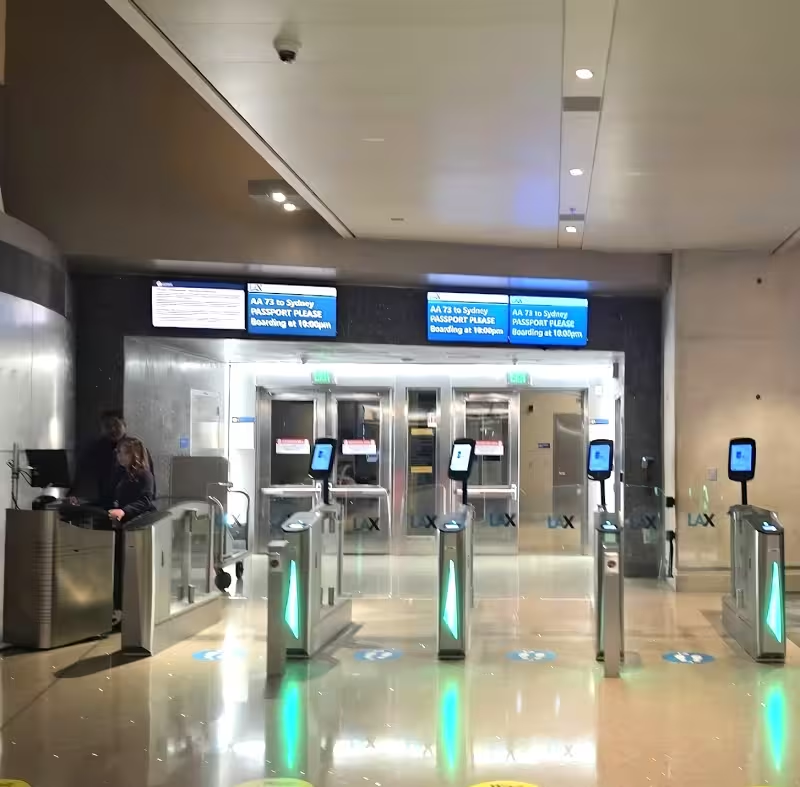
American Airlines is installing turnstiles at new gates on the Dallas Fort Worth C concourse expansion pier and will begin rolling out electronic boarding gates at Dallas Fort Worth International Airport this summer. The carrier says the system, tested in a successful pilot in November 2025, is now being deployed at scale at its largest hub.
The gates are meant to make boarding more seamless, user-friendly and consistent, American said, while also cutting down on manual work for team members at the podium. Each gate will show American-branded touchscreen instructions, automatically validate boarding passes before opening and regulate the pace of boarding to ease congestion and improve jet bridge flow.


The move lands as airports increasingly turn to e-gates, a technology that often uses facial recognition to confirm identity, though American does not say whether its boarding gates will include the optional photo add-on. So far, that kind of system has mostly been used for international departures, but the airline’s push puts the process directly into the heart of domestic boarding at its busiest airport.
American has already tightened boarding enforcement by automatically denying access to passengers who try to board before their group is called. It still allows families to travel together with the highest-priority member, so an Executive Platinum traveler can board with group 1 even if a child’s basic economy boarding number is group 9. That matters because the airline has identified the biggest bottlenecks as too many carry-ons, limited overhead bin space, gate-checking bags, families bunching up during preboarding and standby processing at the gate.
The summer launch at Dallas Fort Worth International Airport makes the test a real-world stress test for how much technology can smooth boarding without changing the underlying mess of full bins, packed gate areas and passengers eager to get on first. If the rollout works as planned, American will have turned one of air travel’s most routine choke points into a controlled, digitized handoff at its largest hub.