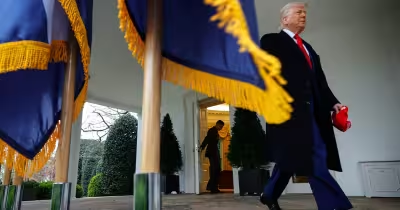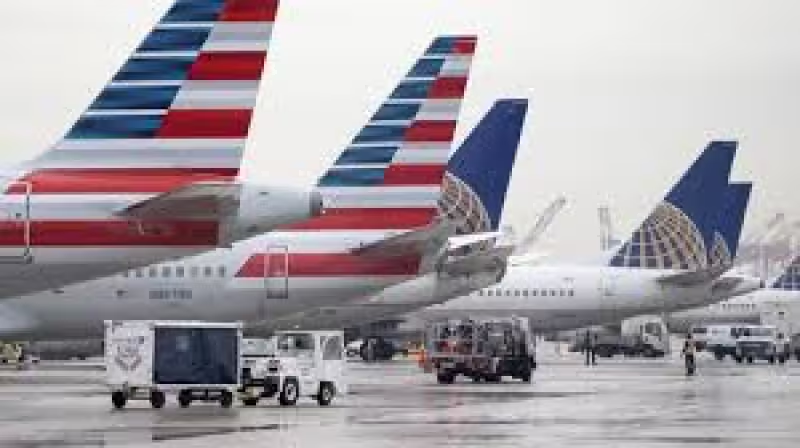
United Airlines Chief Executive Scott Kirby pitched President Donald Trump on the potential for a merger with American Airlines during a White House meeting on February 25, according to two sources familiar with the matter. The discussion came near the end of a scheduled session about the future of Dulles airport, three days before the start of the U.S.-Israeli war with Iran.
The idea would join two of the largest U.S. network carriers in an industry already dominated by four airlines that each hold roughly 17% of domestic traffic, according to Transportation Department data. United and American were already the world's two largest airlines by available capacity in 2025, per OAG, underscoring how far any deal would go in reshaping a market that carries the bulk of U.S. domestic flyers.
Industry officials said approval would be hard to win because unions, rival airlines, lawmakers and airports are all likely to fight it. They pointed to route overlap and the chance of job losses, while a White House source said there was skepticism about the tie-up because of its effect on competition and ticket prices.



The broader policy backdrop also cuts both ways. U.S. Transportation Secretary Sean Duffy said this month there was room for consolidation in the airline industry, but he warned that any deal would face close scrutiny for its impact on consumers. Seth Bloom, a longtime airline counsel, said the administration cares deeply about what affects the consumer's pocketbook and argued that a tie-up would give airlines more pricing power.
Kirby has long argued that a combined airline would be a stronger competitor in international markets, where United and American already carry a large share of long-haul service. Industry officials noted that U.S. citizens make up 60% of passengers and that U.S. airlines operate two-thirds of long-haul seats to and from the country, which would make any consolidation case politically sensitive as well as commercially complex.
The question now is not whether the idea can be floated again. It is whether the White House and regulators would ever be willing to let two of the country's biggest carriers become one in an industry where even modest changes can move fares, routes and jobs at the same time.