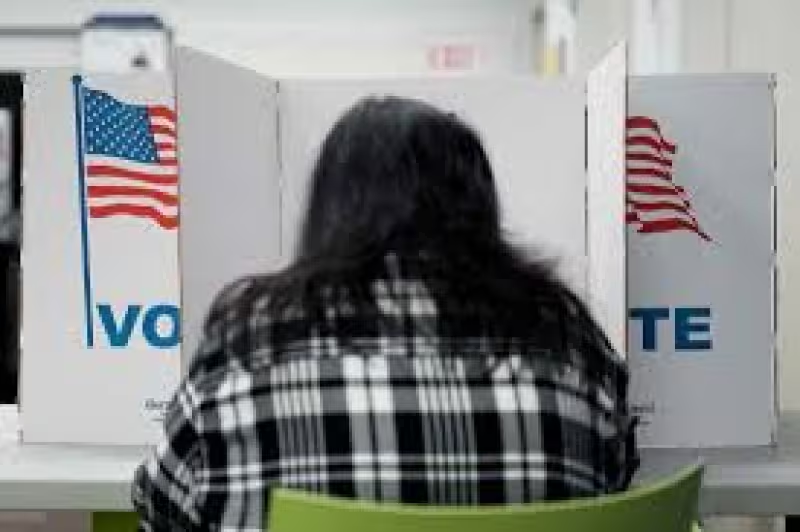
Virginia Governor Abigail Spanberger signed the national popular vote bill into law, bringing Virginia into an interstate compact that would award the state’s presidential electors to the winner of the national popular vote. The move adds Virginia to 17 other states and the District of Columbia and gives the compact 222 electors, still short of the 270 needed to take effect.
The new law deepens a long-running push to change how presidents are chosen. Under the National Popular Vote Interstate Compact, participating states agree to assign their electors to the candidate who wins the most votes nationwide, regardless of how their own voters cast ballots. Supporters say the plan is aimed at making every presidential vote count the same, no matter where it is cast.
For Virginia, the timing matters because the state is joining a campaign that already has enough legislative traction to be within reach of the threshold. Legislation has been introduced in enough states to potentially get to 270 electoral votes, including Arizona, Michigan, Nevada, New Hampshire, Pennsylvania and Wisconsin. If those efforts succeed, the compact would not need a constitutional amendment to change the way presidential electors are allocated in participating states.



The push also has public support on its side. A Pew Research Center poll in 2024 found that 63% of Americans would replace the electoral college with a national popular vote for president, while 35% would keep the current system. The issue has gained force after elections in which the electoral college and the popular vote diverged. Stand Up America said George W. Bush won the White House in 2000 despite losing the popular vote and Donald Trump did the same in 2016, underscoring the complaint that a president can win without winning the most votes.
That argument has helped drive a coalition that now spans Democratic-leaning states only. Every state that has enacted the compact so far has had Democratic electoral majorities, a political fact that has shaped both the pace and the geography of the effort. Supporters say the arrangement is lawful under Article II, section 1 of the US Constitution and does not require congressional approval under their reading of interstate-compact rules.
John Koza said the group behind the push would keep working state by state until the candidate who wins the most popular votes is elected president and every voter is treated equally in every presidential election. Christina Harvey said the presidency should go to the candidate who receives the most votes nationwide, not just the right combination of battleground states, and called Virginia’s move one step closer to a system where Americans’ votes for president and vice-president count equally, no matter where they live.
The compact now stands at 222 electors, which means Virginia’s action is meaningful but not decisive. The question is no longer whether the idea has political traction; it does. The question is whether enough additional states will finish the job and turn a patchwork of state laws into the mechanism that chooses the next president.