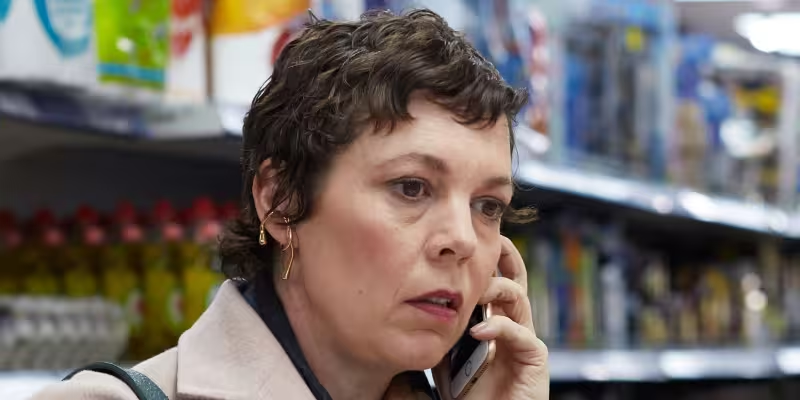
Olivia Colman says she had seen plenty of dramas about dementia before The Father, but none that put viewers inside the confusion itself. Now available to stream tonight on Prime Video, the 2021 film returns with the same unsettling force that helped make Anthony Hopkins’ performance unforgettable.
Colman plays Anne, the daughter who keeps trying to arrange care for her 80-year-old father, Anthony, played by Hopkins, as he rejects one carer after another. The film never stands outside his collapse. It shows the world from Anthony’s viewpoint, and that choice remains the reason the story lands so hard.



“I’d seen programs and films made about dementia, and you were an onlooker watching,” Colman said. “To read it, to be as confused as the person, as Anthony Hopkins’s character, was an extraordinary point of view that I’d never considered. Suddenly it felt like, ‘Oh God, of course that’s how awful it feels.’” She added: “I can’t imagine anything that touches it in quite the same way, and quite so beautifully, as Florian’s script.”
Zeller said he wanted to put the audience in a unique position, “as if they were experiencing what it means to lose your bearings,” and said the production played with the set to create a feeling of disorientation. That design choice is what makes The Father more than a portrait of decline. It is an attempt to make the audience feel it, moment by moment.
The timing gives the film a fresh audience, but its power comes from how little it softens the experience. Hopkins won an Oscar for the role, and Colman’s Anne gives the story its emotional pressure, especially in the scenes where care becomes negotiation and then refusal. Colman is familiar to many viewers from Broadchurch, and she also played MI6 officer Angela Burr in The Night Manager, but The Father remains one of her most exacting screen turns. Now that it is streaming on Lionsgate+ via Prime Video, the answer to why people should watch again is simple: it still does what Zeller set out to do, and it leaves no comfortable distance between the viewer and the loss at its center.