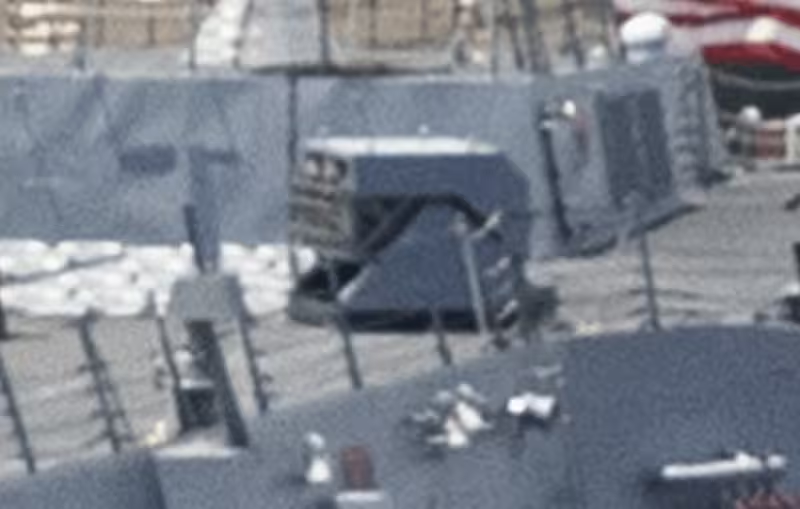
An upgraded Coyote Counter-UAS launcher has been installed on the Pearl Harbor-based USS Carl M. Levin, giving the destroyer the first known dedicated shipboard launcher for Raytheon’s combat-proven anti-drone system on a U.S. Navy ship. The new launcher doubles the system’s missile capacity from four to eight and adapts it for conditions at sea.
The installation on the USS Carl M. Levin is the first in a series of upgrades being rolled out on four ships across the fleet ahead of the next Carrier Strike Group deployment. A Navy spokesperson said the change gives the service a “more resilient and lethal system” and provides a “clear and repeatable model for accelerating the deployment of advanced capabilities throughout the Fleet.”

That matters because the Navy has been trying to close counter-drone gaps since combat operations in the Middle East in 2023 exposed shortcomings in ship defenses. In June 2025, one destroyer had just 100 yards to spare after a hostile drone came close to hitting it, a reminder that the threat is no longer theoretical and that the margin for error at sea can be measured in seconds and yards.
The Carl M. Levin fit is not the Navy’s first look at the Coyote family. Previous versions of the launcher were seen on USS Bainbridge, but the version now aboard the Levin is the first dedicated shipboard launcher of its kind on a U.S. Navy vessel. Current interceptors come in two variants: the Coyote Block 2 kinetic interceptor and the Coyote Block 3NK non-kinetic interceptor. The Block 2 has seen use during the war in Iran, while the Block 3NK has shown success in RTX-led testing.
The broader push reflects a service still working through the lessons of its Middle East deployments, where funding for counter-UAS systems first came from urgent operational needs in the Red Sea and the wider region. The Navy has since been experimenting with new anti-air capabilities on ships in the USS Gerald R. Ford Carrier Strike Group, and the Carl M. Levin launcher is now part of that effort. The answer to the question raised by the deployment is plain enough: the Navy is not waiting for the next close call to rework its defenses.