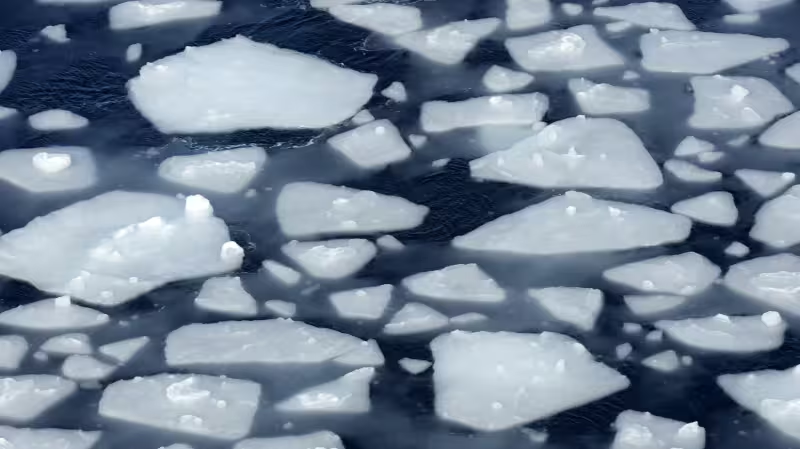
Antarctica’s sea ice expanded for decades even as the planet warmed, then suddenly and dramatically contracted in 2016, and it has not recovered. New research points to a powerful mix of salinity changes, shifting winds and deep-ocean churn as the reason the ice cover flipped so fast.
That matters because the ice around Antarctica helps regulate how much heat the Southern Ocean can absorb and release. The vast Antarctic ice sheet itself would raise global sea levels by 190 feet if it disappeared, making changes in the frozen waters around it a problem far beyond the continent.
The findings come from long-term measurements collected by Argo floats, which sampled temperature and salinity as they sank thousands of feet and then sent the data to a satellite. In the waters around Antarctica, cold air cools the ocean surface while warmer water swirls below. As sea ice expanded before 2016, increased precipitation made the surface fresher and the water beneath saltier, building a layered structure that trapped heat in the depths.



That hidden warmth did not stay there. Scientists said intensified and shifted winds pushed surface waters away from antarctica and churned up the deeper heat, helping trigger the abrupt sea ice decline. Earle Wilson said one of the key takeaways is that the ocean plays a huge role in modulating how sea ice varies from year to year and decade to decade. He added, “What we witnessed was basically this very violent release of all that pent up heat from below that we linked to the sea ice decline.”
The wind changes were likely driven at least in part by climate change, scientists said, although they are still working out how much of the shift was caused by natural variability. That uncertainty is the main gap left by the study, but it does not change the larger conclusion: the sea ice behavior is tied to a longer pattern in the Southern Ocean, not just a local break in weather.
For now, the ice remains well below its pre-2016 state, and the question is no longer whether Antarctica’s sea ice can swing sharply. It has already done that. The harder question is how much more heat the ocean has stored away for the next turn.