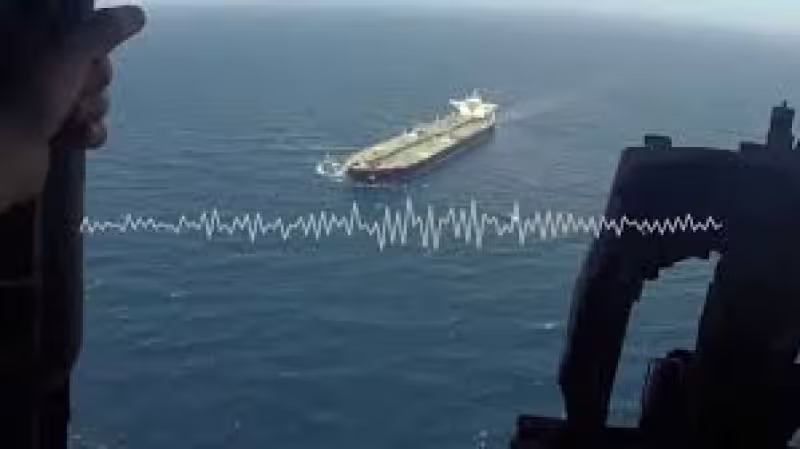
Iran said Friday it fully reopened the Strait of Hormuz to commercial vessels, only for the British military to report that two gunboats from Iran’s Revolutionary Guard opened fire on a tanker crossing the narrow waterway. The United Kingdom Maritime Trade Operations Centre said the ship and crew were reported safe.
The confrontation came after Iran said it was reimposing restrictions on the Strait of Hormuz in response to a U.S. blockade on Iranian shipping and ports, and after Tehran said it had already prevented vessels from crossing throughout the seven-week-long war except for those it authorized. President Donald Trump said the American blockade would “remain in full force” until Iran reaches a deal with the United States, including on its nuclear program.


The Strait of Hormuz is a vital waterway and has become a flashpoint in the wider war in the Middle East between the United States, Israel and Iran. The latest restrictions underline how quickly access to the passage can shift from a commercial issue to a military one, with global shipping exposed to decisions made in Tehran and Washington.
The standoff also showed how far apart the two sides remain. Iranian Deputy Foreign Minister Saeed Khatibzadeh said the Iranians were not ready for a new round of face-to-face talks with the U.S. because the Americans “have not abandoned their maximalist position.” Trump, meanwhile, said Friday that the U.S. will go into Iran and “get all the nuclear dust,” referring to the 970 pounds, or 440 kilograms, of enriched uranium believed to be buried under nuclear sites badly damaged by U.S. military strikes last year.
Those strikes were intended to cripple Iran’s program, but the uranium estimate has kept the issue alive and made any deal about more than shipping lanes. With the fighting still shaping security at sea and diplomacy on hold, the next move in the Gulf may depend less on words than on whether either side is willing to make the first concession.