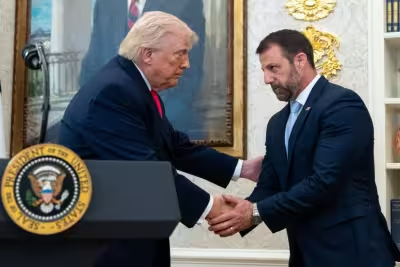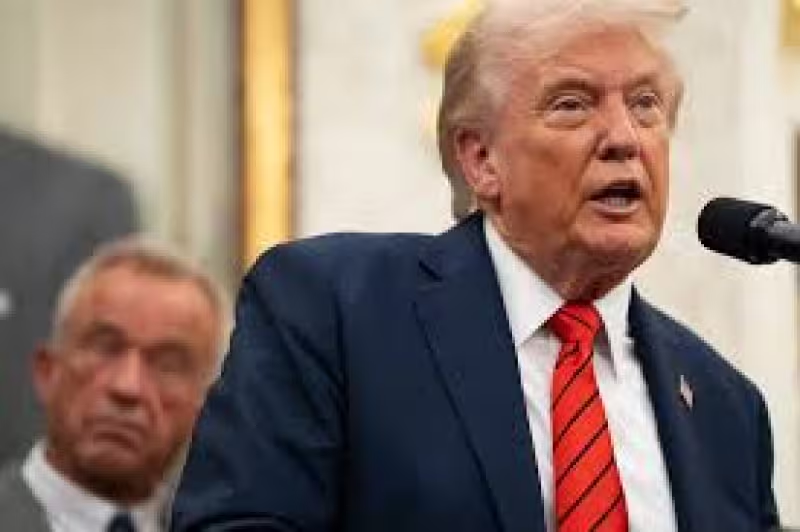
The White House is drafting an executive order on ibogaine, and President Trump intends to sign it as soon as this week. The action would not reclassify the drug for medical use, but it would keep ibogaine in Schedule I while opening the door to federal funding for more research on its possible use in post-traumatic stress disorder and traumatic brain injuries.
Ibogaine is a naturally occurring compound from a shrub native to Africa, and in some countries it is used to treat depression, anxiety, addiction, post-traumatic stress disorder and brain trauma. Because it remains illegal in the United States, Americans have been traveling to unregulated clinics, often in Mexico or the Caribbean, to take it, part of a wider push to find new options in a field where researchers say psychedelics could eventually fill a gap, especially for opioid dependence.
The move lands after years of small studies that have kept hope and caution in the same frame. A 2023 review of 24 studies involving 705 people found ibogaine appeared to reduce withdrawal symptoms and craving, but also raised worries about heart toxicity and death. That concern is not theoretical: the report said at least 27 people have died after taking ibogaine.


Supporters point to the limited but growing clinical work. A small study of 30 veterans who received ibogaine paired with intravenous magnesium reported no serious cardiac events. Stanford Medicine published a study last July saying the drug safely reduced post-traumatic stress disorder, anxiety and depression in veterans when combined with magnesium to protect the heart. Last year, Texas Gov. Greg Abbott signed a bill approving $50 million for ibogaine research, a sign that interest in the compound has spread beyond federal Washington.
But the federal government is not treating the compound as ready for routine medical use. Ibogaine will remain a Schedule I drug, the category reserved for substances with no accepted medical use and a high potential for abuse, even as the administration seeks money for more work on whether it can help wounded troops and people with addiction. The scientific evidence so far is still mostly made up of small observational studies and open-label trials, with only one double-blind, placebo-controlled randomized clinical trial completed, while more advanced trials are just getting underway.
The contradiction sits at the center of the announcement: the White House is signaling that ibogaine may be worth studying, while leaving in place the legal status that has pushed patients abroad and kept the treatment outside ordinary American medicine. Trump officials have framed the broader debate in blunt terms, asking whether it is “snake oil” or a legitimate treatment. For now, the government appears ready to find out without saying the answer is already known.