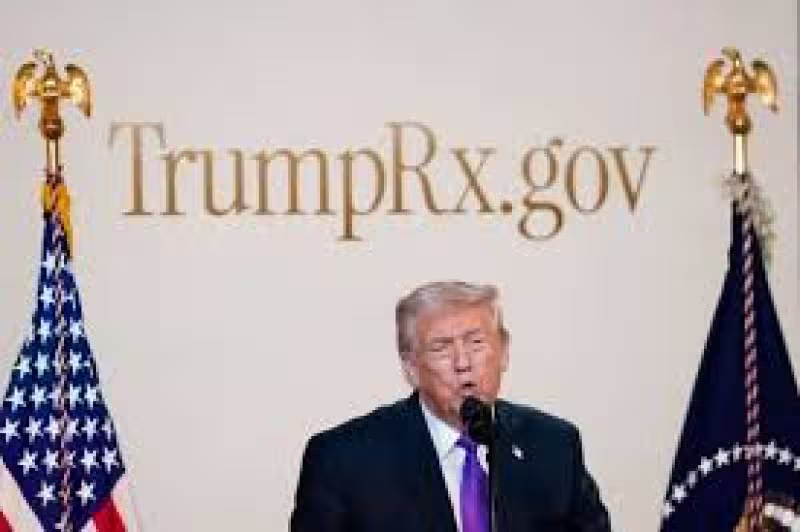
The Trump administration’s TrumpRx website was launched in February 2026 to bring U.S. drug prices closer to those in other rich countries. But a March review of listed TrumpRx prices against publicly available NHS data found that many medicines still cost significantly less in the UK, even as some high-demand treatments, especially in obesity care, became cheaper for some U.S. patients.
The gap matters because pricing in the United States is set by a patchwork of insurance coverage, manufacturer deals and retail pricing, while in England most patients pay a fixed prescription charge per item. That leaves TrumpRx, at least so far, as a partial answer rather than a full reset. Critics have said it looks more like a tool for people paying cash than a fix for insured patients, and the administration’s own pitch has not produced lower prices across the board.


The latest pressure came from recent reporting that, citing a Senate Democrats’ report, said pharmaceutical companies continued to raise prices on hundreds of medicines even after entering pricing agreements with the administration. The report said the increases covered cancer drugs and treatments for chronic conditions, and that some newly launched medicines carry annual costs reaching hundreds of thousands of dollars. Sen. Ron Wyden called the effort a “glorified coupon book,” while Sen. Bernie Sanders said patients in the U.S. “continue to pay by far the highest prices in the world for prescription drugs.”
Stacie Dusetzina told News that the details of the deals remain unclear and may not significantly reduce costs for patients. That warning cuts to the center of TrumpRx: the site may produce some visible discounts, including a $149/mo price point for certain medicines, but the comparison showed several widely used drugs still cost much less under the UK system. In other words, lower list prices do not necessarily mean lower bills.
The administration has also proposed tariffs on pharmaceutical imports from companies that refuse “Most-Favoured-Nation” pricing terms, a move ING economists warned could raise costs further, particularly for generic medicines that depend on imported components. For now, TrumpRx is showing both the limits of executive-branch price pressure and the tension between headline discounts and the broader drug market, where many patients may still be paying far more than the platform was built to solve.