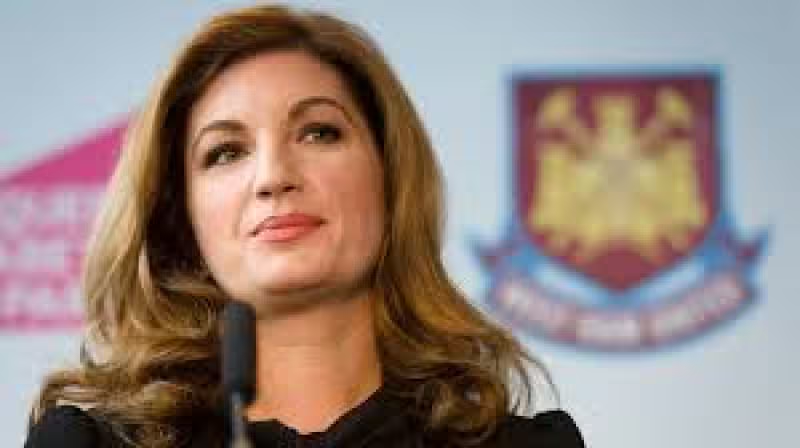
Baroness Karren Brady has stepped down as vice-chair of West Ham after 16 years at the club, ending a long run that began when she was appointed in January 2010 by then joint-chairs David Sullivan and David Gold. Brady left West Ham United on 15 April.
In a statement to the Times, Brady said she had made the decision to leave in mid-February, after first starting to consider it in January. She said it had been a privilege to work alongside the board, management, players, staff and supporters at West Ham United, and said the highlight would always be lifting the Uefa Europa Conference League trophy.
Her departure closes a chapter that covered some of the most consequential years in the club's modern history. Brady, who was previously managing director at Birmingham City, joined West Ham after becoming the youngest managing director of a UK public limited company when she floated Birmingham City on the London Stock Exchange in 1997, having taken that job aged 23 in 1993. At West Ham, she oversaw the move from Upton Park to London Stadium in 2016, the club's victory over Tottenham to secure the tenancy of the stadium, and Declan Rice's £105m transfer to Arsenal.

Those years brought silverware and pressure in equal measure. West Ham reached the Europa League semi-finals in 2021-22 and won the 2022-23 Conference League, their first major trophy since 1980, while also spending 14 consecutive seasons in the Premier League. But the club is now only two points clear of 18th-placed Tottenham with five matches left, and some fans have spent much of the current season protesting against Brady and co-owner Sullivan.
Brady has also been involved in West Ham's women's team, who are 11th in the Women's Super League and remain the only WSL side yet to play at their club's larger men's stadium. The club's women's academy is the only one in the league to be ranked category two, underlining how far her influence stretched beyond the first team.
Joint-chair Daniel Kretinsky said Brady's contribution to West Ham United's growth had been absolutely essential and not always fully appreciated, adding that she was a highly appreciated figure in the Premier League leadership community and an excellent representative of the club there. Brady leaves with the kind of record that can survive the arguments around it: a stadium move, a European trophy and a transfer fee that changed the scale of the club's business. What comes next is a West Ham side under strain, and a board that has lost one of the figures most closely tied to its modern identity.