
Rocket Lab shares have fallen 14% from their 52-week high, but the company keeps adding work fast enough to keep investors focused on the next lift-off. The stock reached nearly $100 a share in mid-January, then gave back ground after a Stage 1 fuel tank ruptured during a hydrostatic pressure test and the company pushed the Neutron rocket's debut to the fourth quarter of this year.
The latest business wins have helped steady the picture. In mid-March, Rocket Lab signed a $190 million contract for 20 hypersonic test flights using its HASTE launch vehicle. On April 9, it added three Electron launches for iQPS starting in 2028, expanding a relationship that already includes 15 contracted missions. Rocket Lab also supplies iQPS with Motorized Lightband separation systems, tying the launch business to its broader space systems work.
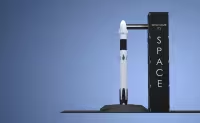


That mix matters because Rocket Lab is no longer just a small-launch story. It has carved out a niche in the small-payload market with Electron, while Neutron is supposed to move the company into medium-lift, reusable launches that can compete for larger payloads. The company says its space systems business includes spacecraft design, manufacturing, software and components, and that division now makes up 74% of its $1.85 billion backlog. Launch services account for the rest.
The numbers help explain why the market has not abandoned the stock despite the setback. Analysts project revenue will rise to $870 million this year and to $1.2 billion in 2027. That growth outlook is part of the same debate that has followed Rocket Lab for months, including in coverage of its Neutron plans and earlier moves such as the company's growth push around its Gauss thruster and other systems work. The backdrop also includes the prospect of SpaceX's IPO in mid-2026, which has become a reference point for investors trying to size up the commercial launch market.
The friction point is clear enough: Rocket Lab is winning contracts and building backlog, but Neutron is still not flying, and the January tank rupture showed how quickly testing can knock a program off schedule. For now, the company's case rests on execution. If it can deliver Neutron in the fourth quarter and keep converting backlog into revenue, the stock's pullback may look less like a warning than a pause.