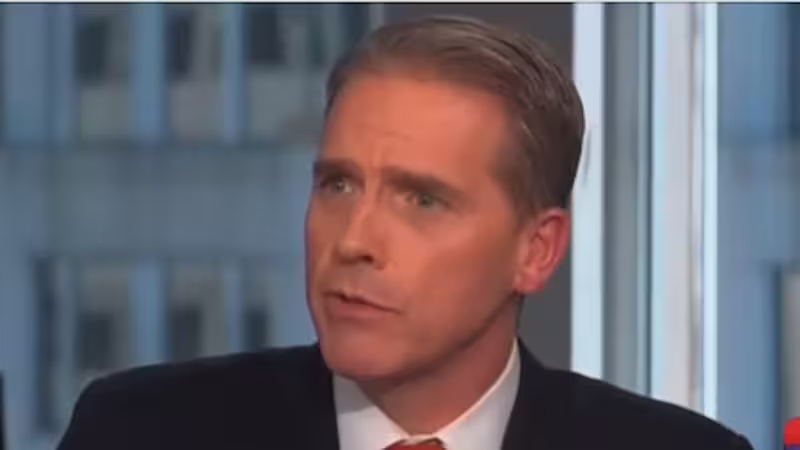
Scott Jennings used a roundtable on April 21 to push back on the idea that America is living through bleak times, even as poll numbers cited on air suggested many people see the future more pessimistically. The discussion centered on Jenna Bush Hager’s interview with the four living former presidents: George W. Bush, Bill Clinton, Barack Obama and Joe Biden.
“I like it when our leaders talk about a hopeful future. I think that’s good for the country,” Jennings said, before adding that he rejected “the premise of the conversation” that the country is in “dark times” or an “uncertain rough patch.” He said, “I mean, I’m pretty happy, and I think a lot of people are.”
The exchange became sharper when Kasie Hunt brought in polling. She cited an NBC survey that asked Americans whether life for their generation would be better, worse or about the same. The results were 30% better, 48% worse and 22% about the same. Hunt also cited another poll asking whether the United States is the greatest country in the world, one of the greatest countries in the world or not one of the greatest countries. That poll found 36% saying the greatest country in the world, 41% one of the greatest countries in the world and 23% saying not one of the greatest countries.


Jennings then tied those numbers to politics, saying that if the split were broken down by ideology, Republicans and conservatives would show more pride in being American than Democrats and liberals. Kate Bedingfield cut in to say, “I think this point about partisan divide and the way you’re bringing up partisan divide is exactly the problem.”
The back-and-forth sharpened from there. Jennings asked, “The problem to tell you the truth about the numbers?” Bedingfield shot back, “Scott, give me a break.” He answered, “I’m not gonna give you a break about the math.”
The segment used Bush Hager’s conversation with the former presidents as a springboard for a broader argument about polarization, and the polling gave both sides something to point to. Jennings argued the country’s mood is being overstated. Bedingfield argued the viciousness of modern politics is real enough to turn regular people off. On that point, the numbers on air did not settle the debate. They only showed how divided the country already is.
For readers following Bush Hager’s interview and the reaction around it, the central fact is now plain: the question was never only whether Americans are hopeful. It was whether a hopeful message can land in a political climate where even the meaning of optimism is split down partisan lines.