The Trump administration’s expanded travel ban has left Andres Pulido waiting months for the work authorization he needs to begin a job building self-driving cars. He applied in October for optional practical training, was supposed to start in February and is still waiting for approval four months later, after the government paused review of applications from people in 40 countries and territories.
The pause covered immigration-benefit applications, including OPT, though people from the affected countries could still file them. The government said the suspension would last only until U.S. Citizenship and Immigration Services finished new vetting guidelines, but processing had not resumed four months later. For Pulido, a native of Venezuela, that delay forced a hard reset: he moved back from California’s Bay Area to Florida once it became clear he would not get the authorization in time.



For Pulido, the setback cut deeper than a missed start date. He said he had already had to remake his life once 10 years ago and had built a future in the United States, with his family, friends, career and professional network here. He said the decision to step back was cold and calculated, because he had to be able to support himself. He also said it was painful to feel that in a country he sees as a champion of immigration, some specific populations simply do not want him there.
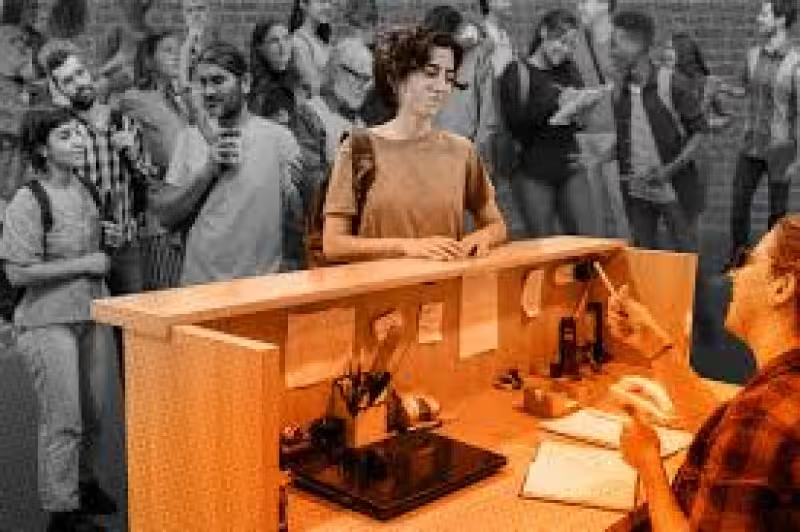
The freeze has had a much wider reach than one student’s plans. The Cato Institute estimates that about two million total petitions are affected, including about one million applications for work authorization. Miriam Feldblum said international students from those countries who have been waiting for OPT processing do not have a clear pathway forward, and that the cases remain trapped in what she called an adjudication black hole.
The friction in the policy is simple and stark: applicants can file, but the government is not reviewing the cases. Experts say no guidance has been released from USCIS on when that will change. For now, thousands of F-1 visa holders remain stuck in a system that has paused their futures without telling them when the clock will start again.