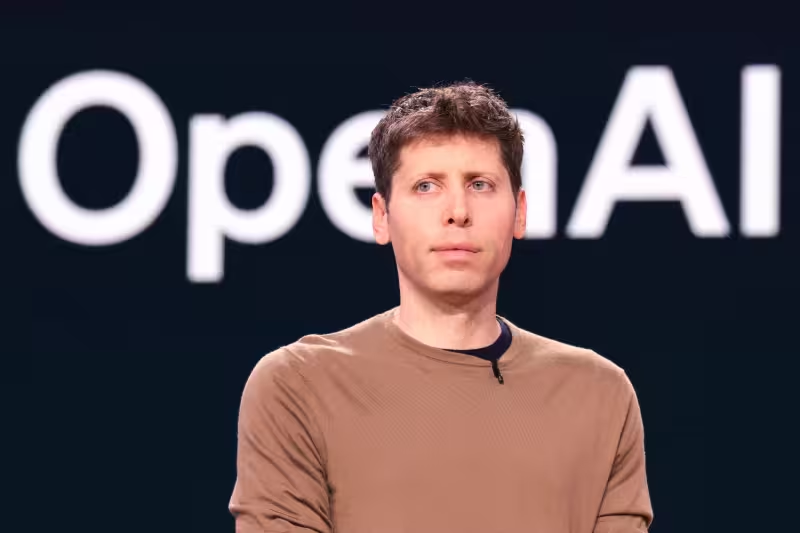
OpenAI missed important internal revenue and user growth targets earlier this year, falling short of a goal to reach 1 billion weekly active users for ChatGPT and missing multiple monthly revenue targets, according to a report cited by Forbes. The gap matters now because the company is expected to pursue a highly anticipated IPO later this year while carrying $600 billion in future compute commitments.
That scale of spending has left some investors and watchers focused on whether the company’s growth can keep up with the bill. Sarah Friar has voiced concerns about OpenAI’s ability to meet future compute contracts if revenue does not rise fast enough, a worry sharpened by the company’s earlier misses and the strain of trying to fund expansion at the same pace.



OpenAI pushed back hard. Spokesperson Steve Sharpe called the report “clickbait” and said the business is “firing on all cylinders,” adding that consumer demand is starting to show up in revenue and that the enterprise business is “in the best place it has ever been.” The company is also trying to control costs and streamline products by scrapping “side quests,” according to the report, a sign that it is looking for discipline even as it keeps spending heavily.
The timing makes the slowdown harder to dismiss. On Tuesday, shares of Oracle, Nvidia, Microsoft, CoreWeave and Softbank fell, reflecting how closely the fortunes of OpenAI’s partners and backers are tied to its pace of growth. The company’s slowdown also comes as rivals such as Anthropic and Google have grown in prominence, adding pressure just as OpenAI is expected to test public markets later this year.
OpenAI now faces a familiar but tougher question: whether a business built on rapid expansion can generate enough openai revenue to support the infrastructure bill it has already signed up for.