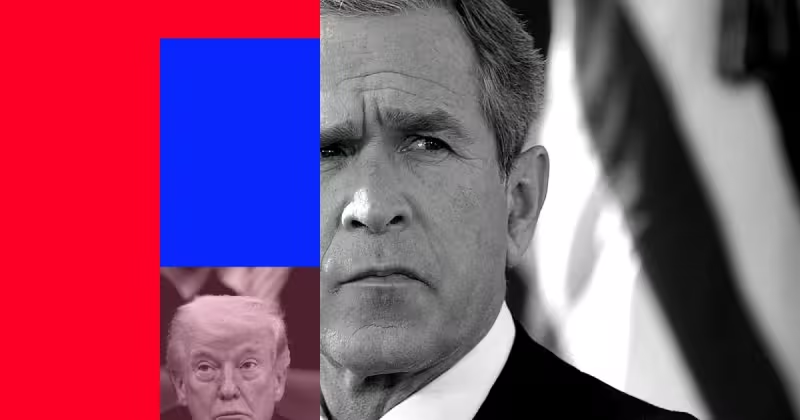
Donald Trump’s approval rating has slipped to 33% in the most recent -NORC poll, with 67% of Americans saying they disapprove of his presidency. The survey found his approval down 5 percentage points in one month, while his disapproval rose by 7 points over the same span.
The new numbers land just as several fresh polls show Trump hovering below or near 40% approval. YouGov put him at 37% approval and 59% disapproval, CNBC at 40% and 58%, and -Ipsos at 36% and 62%, reinforcing a pattern that has kept the president below 40% in most polling averages, including ’ and G. Elliott Morris’ FiftyPlusOne.
The weakness is broad. In the -NORC poll, Trump’s approval was 40% on immigration, 32% on the war with Iran, 30% on the economy and just 23% on cost of living. Those are the issues voters are most likely to feel in their daily lives, and the numbers suggest the president is getting little public credit even on the policy area where he is strongest.


The contrast with George W. Bush’s second term is stark. Bush entered his second term above 50% approval after the 2004 election, then fell into the 40s in 2005, the 30s in 2006 and below 30% by 2008. Trump is not there yet, but his standing has moved in the same direction: from a presidency that still has room to fall, to one that is already struggling to hold a floor.
The comparison matters because the political test around him is already being framed for the midterms. reported that Trump’s advisers want to make the race a choice between the two parties’ platforms rather than a direct referendum on his presidency, a sign they know the approval numbers are a drag. And the economic stakes could worsen if the fallout from the war with Iran spreads beyond gas prices; the Pentagon told Congress it could take six months to clear the Strait of Hormuz of mines, while said food-company costs rose nearly 8% year-over-year in March after a 4.2% increase in February.
The bottom line is that Trump’s 34 percent approval rating is not an isolated poll outlier. It sits inside a wider slide, with disapproval at 67%, weak marks on the economy and cost of living, and a party already preparing to campaign around him without saying his name too often.