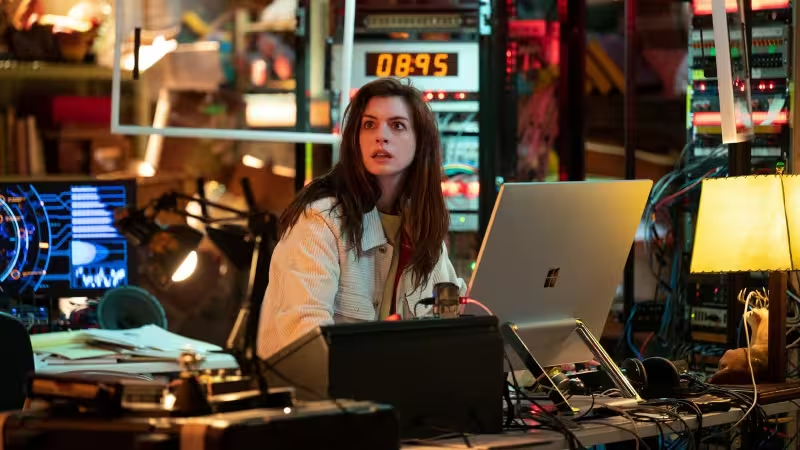
Prime Video quietly released Solos, a seven-part anthology in 2021 that took modern technology to the extreme. The series went straight for the dark side of near-future progress, with every episode built around a major star.
Anne Hathaway opened the run, followed by Anthony Mackie, Helen Mirren, Uzo Aduba, Constance Wu and Nicole Beharie, before Morgan Freeman closed the finale with Dan Stevens as a special guest star. The lineup gave Solos the kind of cast many sci-fi series would envy, but not the audience it needed.

That gap matters because Solos was clearly designed to sell itself on the same hook as Black Mirror: a sci-fi anthology about how modern technology can go wrong in ways that feel uncomfortably close to the present. Instead, the show landed with a 44% critic score on Rotten Tomatoes, while audiences were warmer at 71%, a split that summed up the series’ brief life on the platform.
When Solos was released in 2021, critics responded mostly negatively, and the show did not attract a very wide audience. It was promptly forgotten about after release and never got a second season, which left Prime Video’s ambitious anthology looking less like a breakout and more like a one-off that never found its footing.
That is the answer behind the question Solos now poses in hindsight: the cast was there, the concept was there, and the comparison to Black Mirror was there, but the show could not turn those ingredients into lasting attention.