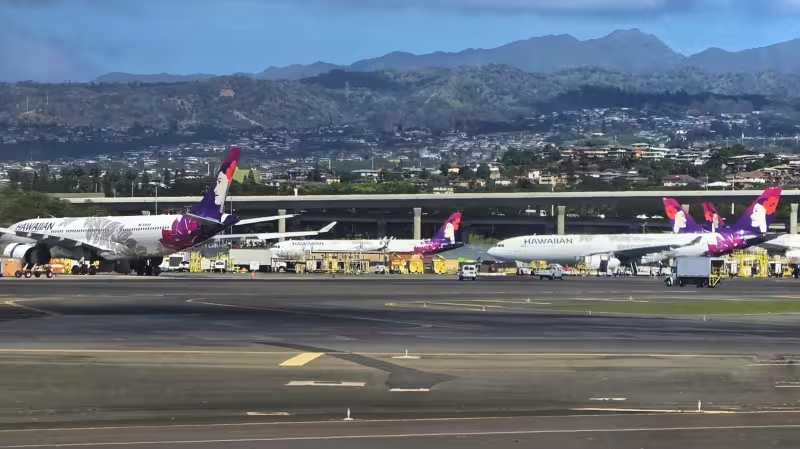
Alaska Airlines told Wall Street on April 23 that it lost $193 million in the last quarter and could not say what the rest of the year will look like, just a day after Hawaiian changed to Alaska and Hawaiian merged into Alaska’s systems. The airline said it is still finishing the absorption of Hawaiian even as investors ask what comes next.
The timing matters because Hawaii travelers have few realistic ways in and out, and limited interisland competition gives airline pricing unusual power. Alaska told investors that Hawaii bookings had returned to last year’s level on strong fare increases, and it expects second-quarter unit revenues to be up, but that confidence sits beside an industry that is still sounding cautious. United is already saying fares may need to rise 15% to 20%, Delta says higher fares may remain even after fuel eases and Southwest has stopped forecasting the year entirely.



That mix leaves Alaska in a difficult place. It is just finishing absorbing Hawaiian while itself being discussed as a possible acquisition target, a sign that the company’s next move may not be entirely its own. The new structure already does not appear settled after Hawaiian changed to Alaska on April 22, and the airline’s own refusal to map out the rest of the year suggests the merger has not yet produced the kind of clean picture investors like to see.
For Hawaiian Islands travelers, the immediate answer is not lower fares or calmer planning. It is more uncertainty at the very moment one airline era has ended and another is still being built. If the sector’s current pricing holds, the pressure on travelers is likely to continue into the second-quarter and beyond, with Hawaii’s limited choices giving airlines room to keep testing how far customers will go.