When Tara Baker died in a fire at her Athens, Georgia, apartment in January 2001, police quickly determined the blaze had been set intentionally and that she had been killed in a violent attack. In the years that followed, her boyfriend, Chris Melton, remained one of the first people investigators examined.
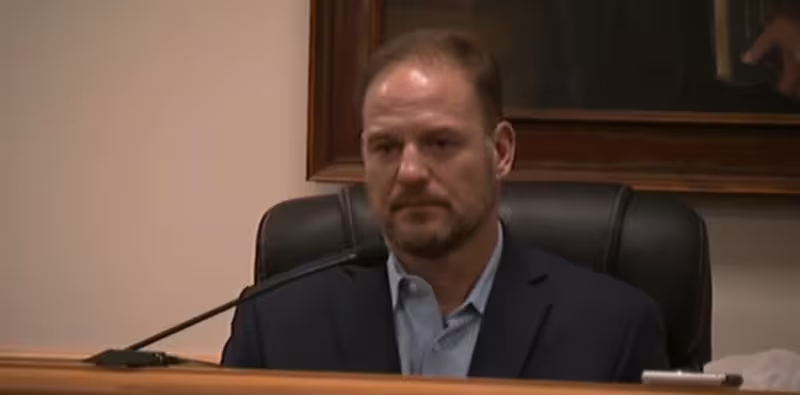
Melton testified for the prosecution in February 2026 during the trial of Edrick Faust, describing how the 23-year cold case once turned inward on him. He said he gave police a detailed account of the day he learned Baker was dead and of his own movements on January 19, 2001, when he was in Loganville for work and left home at 6 in the morning.
The testimony mattered because Baker’s death was not just another unsolved killing. Police found her remains inside the apartment, and the fire was ruled intentional, pushing detectives to look closely at the people around her. Melton, who had met Baker at Georgia College and later stayed in an exclusive relationship with her, was an obvious focus because he was her boyfriend at the time she died.
He said Virginia Baker paged him that afternoon to tell him about the fire and Tara Baker’s death. The next day, police questioned him and saw visible bruises on his knuckles. Melton said they came from punching a wall in grief. He also said the police work felt intrusive, including the attention paid to his finances and personal life.
That scrutiny did not lead to charges. Investigators searched for evidence tying Melton to the killing and found none, and he was cleared as a suspect by a solid alibi and what later accounts described as a thorough investigation. Still, the defense in Faust’s trial raised Melton by name and argued that detectives had not properly considered other suspects, underscoring how the old case still carries competing narratives.
Melton, who was born and raised in Loganville, graduated from Loganville High School in 1996 and later worked for McCart Plumbing while living with his parents. He often traveled to Athens to see Baker, who was excited about starting law school. Even now, he keeps a low profile and prefers not to discuss the case publicly, though he continues to remember her with fondness. The prosecution’s use of his testimony shows that, more than two decades later, the story of Tara Baker’s death still turns on the same question investigators first faced: who killed her, and what evidence can finally answer it?